Table of Contents
Traveling with pets out of Portland, Oregon, doesn’t have to be a headache—if you pick the right airline. Alaska Airlines and Frontier Airlines really stand out for pet travel from Portland, thanks to their friendly policies and reasonable fees.
These airlines let small pets ride in the cabin, while bigger animals can go in the cargo area. That flexibility makes a difference depending on your pet’s size and your comfort level.
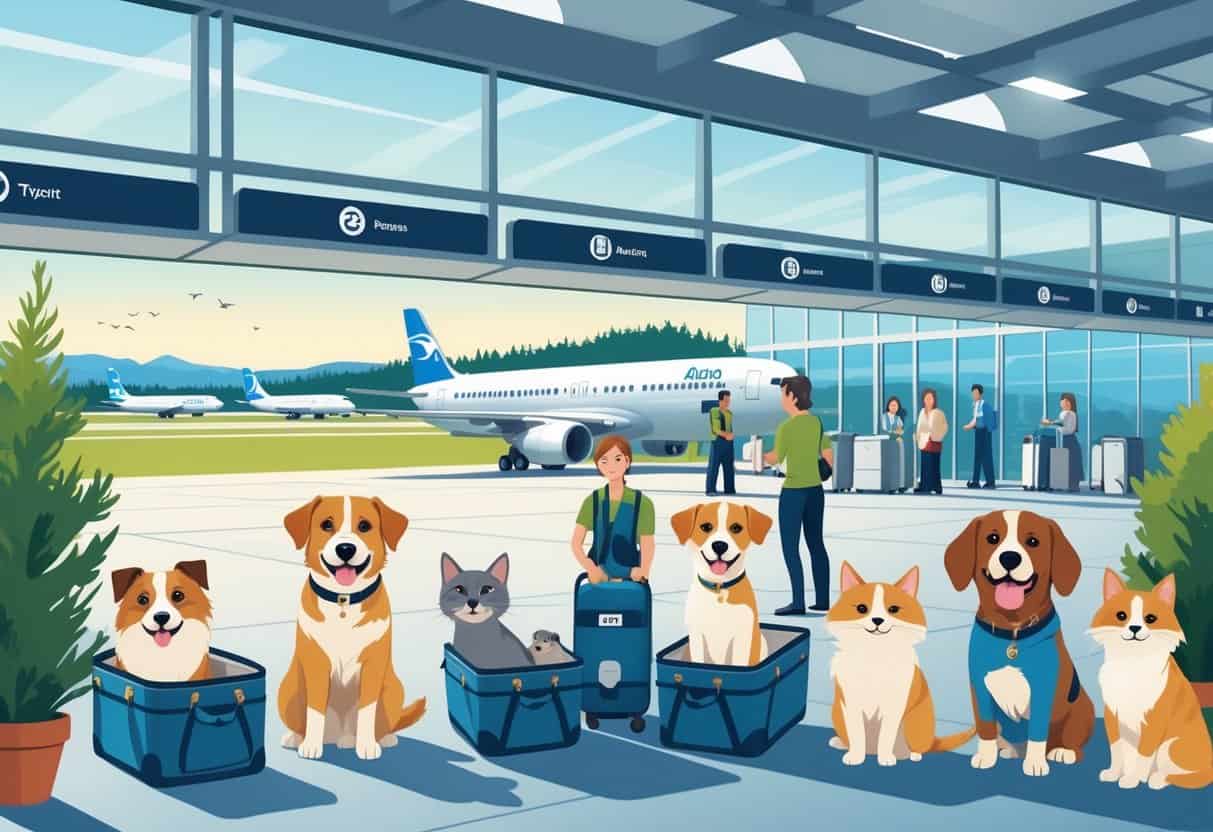
When flying out of Portland International Airport (PDX), it’s smart to check each airline’s rules for carriers, fees, and booking. Alaska, for example, has a pet travel program that’s earned some good reviews.
Choosing the right airline and prepping ahead of time can make a world of difference for your pet’s comfort.
Key Takeways
- Look for airlines with clear pet policies and affordable fees.
- Prepare your pet and carrier according to airline rules.
- Know what to expect at the airport for pet check-in and boarding.
Top Airlines for Traveling with Pets from Portland Oregon

If you’re flying with a pet from Portland, you’ve got a handful of airlines to choose from. Each has its own quirks—fees, cabin sizes, and route restrictions can really vary.
Alaska Airlines Policies and Experience
Alaska Airlines lets small pets travel with you in the cabin, while bigger pets go in the baggage hold. The pet fee starts at about $100 each way.
You’ll need an airline-approved carrier that fits under the seat. Their rules are pretty clear and focus on safety and comfort.
Alaska is a solid pick for domestic flights, especially if pet safety is high on your list. Their staff tends to be helpful if you need a hand during boarding.
Portland is actually a hub for Alaska, so flights are frequent and usually on time. Less waiting means less stress for your pet.
Delta Airlines Animal Travel Options
Delta Airlines is a go-to for folks flying with dogs. Their pet fees are on the lower side, which is great if you travel often.
Small pets can ride in the cabin, but larger ones have to go as checked baggage or cargo. Delta is strict about health certificates and carrier sizes, so double-check before you book.
They’ve got staff trained to handle animals and try to keep things as low-stress as possible. Direct flights from Portland are easy to find, which helps shorten your pet’s journey.
American Airlines Pet Programs
American Airlines gives you a few choices for pet travel. Small pets can go in the cabin if they fit under the seat, while bigger ones travel as checked pets or cargo.
Fees are competitive but can change depending on your route. You’ll need a health certificate from your vet within 10 days of your trip.
American is known for steady pet handling and well-ventilated cargo spaces. You can book pets on most Portland flights, and their website lays out what you need to do before flying.
Hawaiian Airlines Routes and Restrictions
Hawaiian Airlines only lets pets fly as checked baggage or cargo—no cabin pets unless they’re service animals. That’s a big deal if you’re headed to Hawaii.
Hawaii’s quarantine laws mean strict route restrictions and extra paperwork. Sometimes your pet will need a quarantine period, too.
If you’re flying Hawaiian from Portland with a pet, get ready for more paperwork and extra steps. The staff is trained for pet care on long flights, but definitely check their guidelines before you book.
Preparing Your Pet for Air Travel
Getting your pet ready to fly takes some planning. You’ll need the right paperwork, up-to-date vaccines, and clear identification.
Required Travel Documents for Pet Transport
You’ll need a health certificate from your vet, usually within 10 days of travel. Airlines want to know your pet is healthy and okay to fly.
Rabies vaccination proof is a must. Some places ask for more documents, like import permits or airline-specific forms.
Keep all the paperwork handy at check-in. Without it, your pet could be denied boarding. A folder or envelope helps keep everything together.
Understanding Health Requirements and Rabies Vaccination
Your pet should be at least eight weeks old and fully weaned. Rabies shots are required, and they should be given at least 30 days before your flight.
You’ll need a certificate showing the vaccination date and vaccine details. Sometimes other vaccines or parasite treatments are needed, depending on the airline.
Ask your vet to double-check that your pet meets all the health requirements before you book.
Microchipping and Identification
Microchipping is the best way to make sure your pet can be identified if they get lost. Some airlines and destinations require an ISO-compliant microchip.
Besides the chip, put a collar on your pet with a tag that has your contact info. That way, staff can reach you quickly if your pet gets found.
Double-check that your microchip info is up to date in the registry. If your pet already has a chip, have your vet scan it before you travel to make sure it works.
Pet Travel Logistics and Services
Flying with your pet means prepping their kennel, planning for layovers, and dealing with airline staff. Knowing the rules can make the trip smoother for both of you.
Travel Kennel Guidelines and Sizing
Your pet’s kennel has to meet airline size and construction rules. It should be big enough for your pet to stand, turn, and lie down.
Most airlines want leak-proof bottoms and ventilation on all sides. Solid plastic kennels with metal doors are usually required, but soft-sided carriers might be okay in the cabin for small pets.
Label the kennel with your contact info and your pet’s name. Toss in a blanket or toy to keep your pet calm. Make sure the latch is sturdy so it won’t pop open.
Managing Layovers and Connecting Flights
Layovers can be rough on pets, especially if they’re long or involve multiple stops. Try to book routes with the shortest layovers you can find.
If your pet needs to switch planes, check that the airport has pet relief areas. Give yourself enough time to check on your pet and handle any paperwork.
Direct flights are usually better for pets—less stress, less chance of problems. If you can’t avoid a layover, keep your pet’s kennel close and check its condition whenever you can.
Pet-Friendly Customer Service
Customer service really matters when you’re booking a pet flight. You want clear info on policies, fees, and health requirements.
Call the airline’s pet desk to reserve a spot—there’s often a limit on how many pets can fly per flight. Ask about special services like Pet Connect or animal travel programs.
Helpful staff can walk you through documents, kennel rules, and boarding steps. Don’t hesitate to ask questions to avoid last-minute hiccups.
Special Considerations for Service and Emotional Support Animals
Traveling with a service animal or emotional support animal (ESA) comes with its own set of rules. Airlines have changed ESA policies a lot lately, so double-check before you fly from Portland.
Documentation and Certification for Service Animals
You’ll need proof your animal is a service animal. Usually, that’s a letter from a healthcare provider or official ID showing the animal’s training.
Most airlines want advance notice if you’re bringing a service animal. They may ask for:
- A letter or form dated within the past year
- Vaccination records
- Info on your animal’s behavior and training
Service animals need to behave well in public. You’ll have to manage your animal on your own, without expecting airline staff to help.
Emotional Support Animal Policy Updates
A lot of airlines these days just don’t recognize emotional support animals as service animals anymore.
Instead, you’ll probably have to go through their usual pet policies—no special ESA treatment.
Some airlines might let ESAs fly if you bring recent paperwork, like a letter from a licensed mental health professional dated within the last year.
Expect to pay a pet fee. Honestly, that part’s almost unavoidable.
There are also seat restrictions. ESAs and other pets can’t sit in exit rows or block aisles, mostly for safety.
It’s a good idea to double-check your airline’s ESA policy before you book. Getting caught off guard at the airport is no fun.