Table of Contents
If you’re planning to fly with your pet from Pembroke Pines, Florida, figuring out which airlines are best for pets can really make a difference. Airlines like Alaska, Frontier, and Southwest are pretty well-known for their pet-friendly policies and reasonable fees.
Choosing the right airline helps ensure your pet travels safely and comfortably.
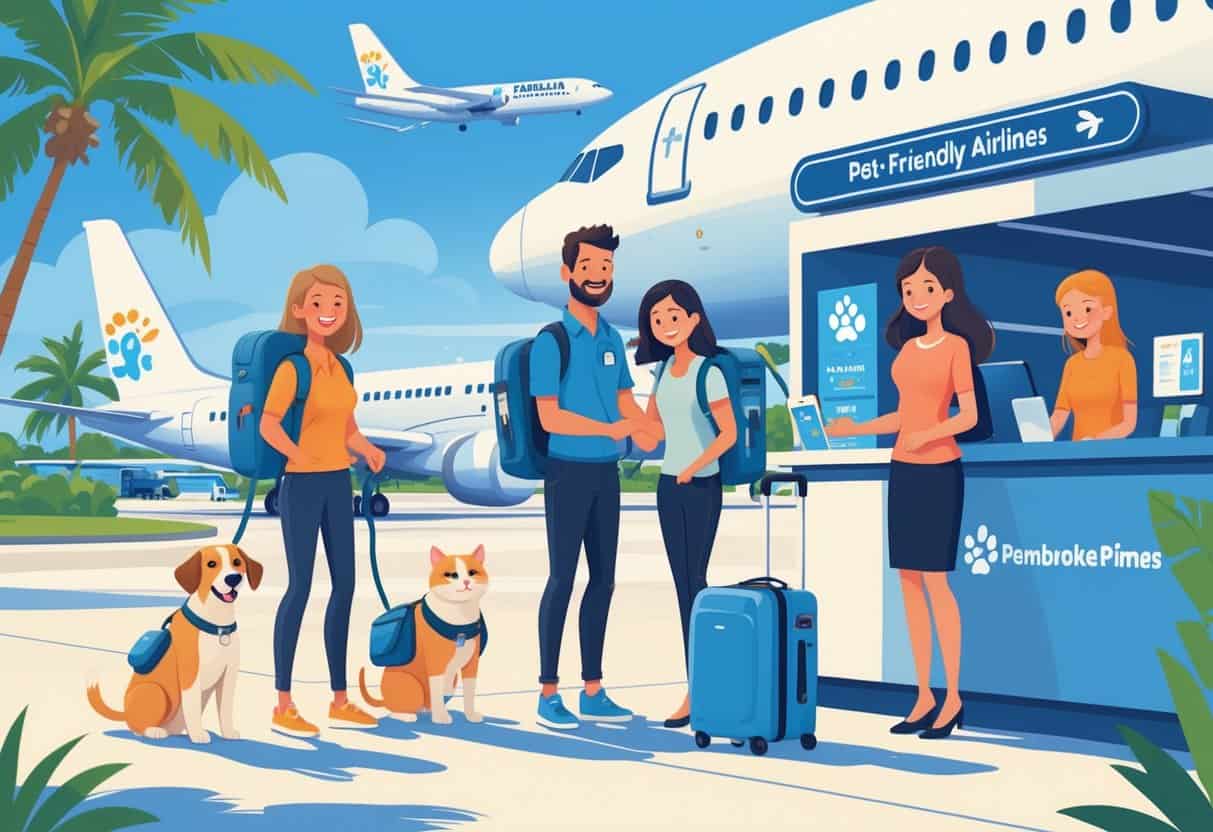
Pet travel rules have changed a lot lately, so emotional support animals are handled differently than before. It’s smart to pick an airline that’s upfront about pet travel instead of relying on emotional support status.
That way, you avoid last-minute surprises and can focus on your pet’s comfort during the journey.
Key Takeways
- Choose airlines known for clear pet travel policies and reasonable fees.
- Understand current rules that affect pet and emotional support animal travel.
- Preparing ahead makes traveling with your pet safer and less stressful.
Top-Rated Airlines for Traveling with Pets
If you’re flying from Pembroke Pines or nearby airports like Fort Lauderdale or Miami, it’s worth knowing each airline’s pet rules. Airlines can differ a lot in fees, allowed pet types, and whether pets can stay in the cabin or need to go in cargo.
Pet Policies and Restrictions
Alaska Airlines is known for clear pet policies. Dogs, cats, rabbits, and birds are usually allowed in the cabin, and the fee’s about $100 each way.
Frontier has pet-friendly options too, but you might find stricter size limits.
Most airlines want your pet in a soft-sided carrier that fits under the seat. You’ll also need your pet to be healthy and have the right vaccinations or paperwork ready.
Some airlines, like Delta and American, only allow pets on select flights from Miami or Fort Lauderdale. That can definitely impact your travel plans from Pembroke Pines.
Cabin vs. Cargo Options
Having your pet in the cabin keeps them close and usually less stressed. Airlines like Alaska and JetBlue let small pets fly in-cabin if the carrier fits under the seat.
This option works best for short trips or small animals.
Cargo’s for bigger pets or if the cabin’s full. It’s often pricier and can be more stressful for animals.
Not every airport in Broward County offers cargo services for pets, so double-check before booking.
Also, check with the airline about temperature rules for cargo. Some won’t fly animals in extreme heat or cold, which, let’s be honest, is a real thing in Florida.
Breed and Size Considerations
Each airline has its own take on size and breed rules. For instance, Air France lets animals in the cabin up to 22 pounds, carrier included.
Some breeds, especially brachycephalic dogs like bulldogs or pugs, might face travel restrictions since they can have breathing issues. Airlines may block certain breeds from cargo or even cabin travel.
If you’re in Pembroke Pines and want to fly from Miami or Fort Lauderdale, check size and breed rules with your airline before booking. Better safe than sorry.
Choosing the Best Airport for Pet Travel
When you’re traveling with your pet from Pembroke Pines, picking the right airport can make the whole thing a lot easier. Airport size, layout, and pet amenities all matter more than you’d think.
Understanding the differences between Miami and Fort Lauderdale airports is pretty helpful.
Miami vs. Fort Lauderdale Airport Facilities
Miami International Airport (MIA) is huge and always busy. It’s got more airlines that fly pets in-cabin and as checked baggage, so you get more choices if your pet needs special arrangements.
Fort Lauderdale-Hollywood International Airport (FLL) is smaller and usually less crowded. That means shorter lines and quicker security, which can be a relief for both you and your pet.
Both airports have pet handling areas, but FLL’s layout is tighter, so moving between check-in and gates with your animal is simpler. Miami’s bigger, so expect more walking or maybe even a shuttle ride.
Pet Relief Areas and Amenities
Both Miami and Fort Lauderdale airports have pet relief areas, but they’re not all the same. At FLL, pet relief spots are close to terminal doors and gates, so quick bathroom breaks are easy.
Miami Airport has more relief zones, both inside and outside. There are grassy patches and safe spaces for your dog or cat.
Some terminals at MIA have pet relief zones after security, which is super helpful if your pet’s waiting with you before boarding.
Fort Lauderdale offers pet hydration stations, and you’ll sometimes spot water bowls in common areas at both airports. Still, it’s a good idea to carry a portable water bowl, especially if it’s hot or you’re stuck waiting.
Tips for a Smooth Pet Travel Experience
Planning ahead makes traveling with a pet a whole lot less chaotic. You’ll need the right paperwork and vaccinations, and picking flights that skip long layovers helps keep your animal calm.
Preparing Documentation and Vaccinations
You’ll need a current health certificate for your pet from your vet. That usually means proof of rabies vaccination and any other required shots.
Some airlines want specific forms or proof of flea and tick treatments too.
Check each airline’s pet rules before you book. Airlines can have different limits on breeds and sizes.
If you’re traveling from Pembroke Pines through Broward County airports, make sure your pet meets both state and airline requirements.
Keep your pet’s documents where you can grab them fast. You’ll need to show proof at check-in or if airport staff ask, and missing paperwork could mean your pet can’t board.
Booking Direct Flights from Broward County
Direct flights from Broward County are usually a safer bet for your pet. Fewer stops mean less time stuck in carriers or cargo, which can only be a good thing.
Alaska Airlines and Delta both run flights out of Fort Lauderdale-Hollywood International Airport. They offer pet-friendly options—think in-cabin travel or cargo services—though it’s best to double-check the details.
Book early. Airlines only allow a handful of pets per flight, so spots fill up fast.
Don’t forget to look up pet fees before you book. Depending on the airline, you might pay anywhere from $100 to $125 each way.