Table of Contents
Traveling with a disability isn’t always easy, especially when it comes to picking the right airline. If you’re flying out of Orange, California, you’ve got a few solid options that can make things a lot smoother.
Airlines like Delta, Southwest, and Alaska are known for reliable wheelchair assistance and accommodating medical devices, which goes a long way for disabled travelers.

John Wayne Airport in Orange County has its own programs, like Helping Hands, to cut down on stress for disabled travelers. Most airlines here are ready to help with special needs, so you can expect a bit less hassle from check-in to boarding.
Key Takeways
- Several major airlines at Orange County airports offer strong disability support.
- The airport itself has programs aimed at making travel easier for passengers with disabilities.
- Planning ahead with the right airline can really improve your trip.
Accessibility Services at Orange California Airports
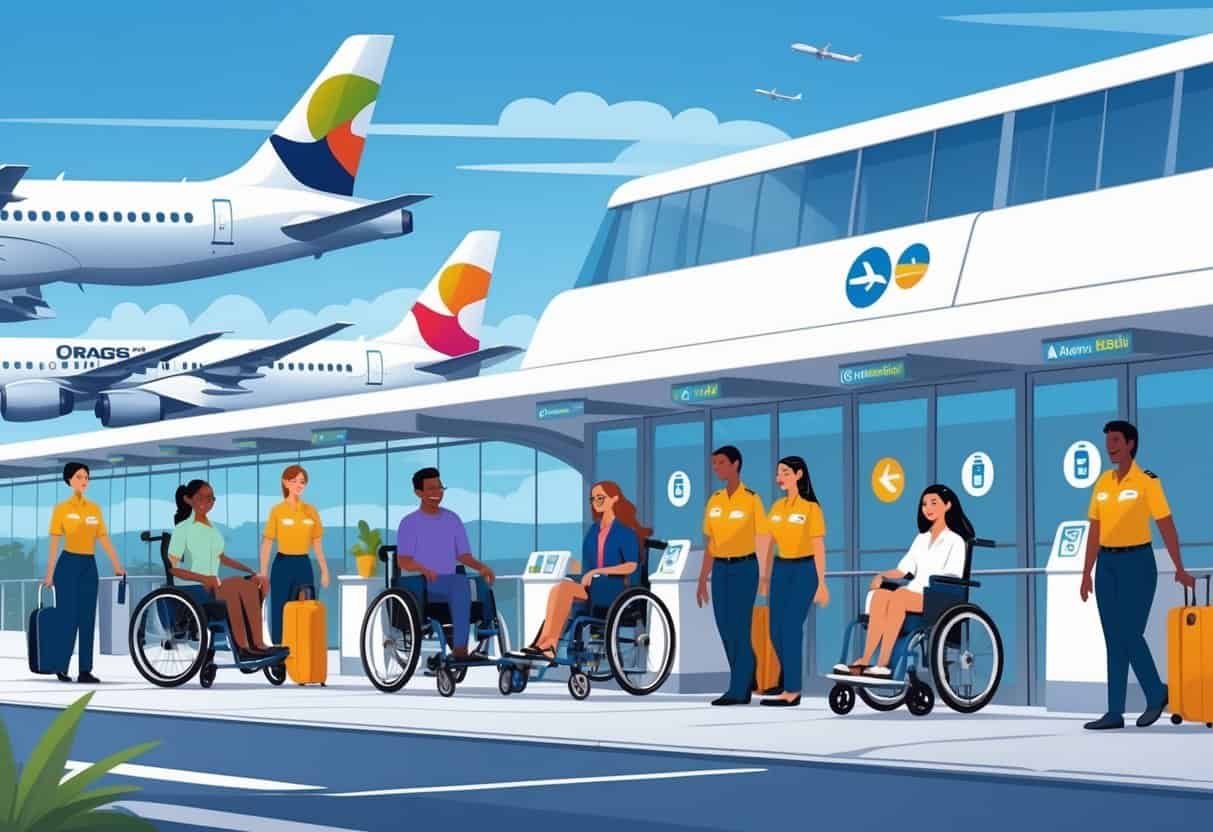
If you’re traveling with a disability, Orange County airports have a range of services to help out. There’s wheelchair assistance, special help teams, and pre-boarding—all designed to take some of the edge off.
Wheelchair Assistance Options
When you get to the airport, you can ask for wheelchair assistance to help you get around. Most airlines and airports have electric carts and manual wheelchairs, so you’re not left struggling.
You can set this up with your airline ahead of time, or just ask when you arrive. At John Wayne Airport, OCTA ACCESS Services can also help with transportation if you need it.
Wheelchair escorts are usually on hand to get you through security, boarding, and even connecting flights. It’s a big help if you want to avoid long walks or standing in lines.
Pre-Boarding Procedures
Pre-boarding gives you a little extra time to get settled on the plane—no need to rush. It’s mainly for travelers with disabilities who need help with seats or equipment.
Let your airline know ahead of time if you want pre-boarding. Delta and Alaska, for example, offer this at no extra cost.
Pre-boarding also means you can grab overhead bin space and get help stowing your carry-ons. Staff trained in special assistance are there to help out.
Airport Special Assistance Teams
Special assistance teams are trained to help disabled travelers at the airport. John Wayne’s Helping Hands program is there to cut down on travel stress.
These teams can help with check-in, security, getting between terminals, and handling your luggage. They aim to give you the support you actually need.
You’ll usually find special assistance desks, or you can ask your airline for help. Staff can stick with you or make sure you get to your gate safely.
Best Airlines for Disabled Passengers
Knowing your rights and picking the best airline for disabled passengers can really change your travel experience. Some airlines just do a better job with mobility, seating, and special needs.
Policies under the Air Carrier Access Act
The Air Carrier Access Act (ACAA) protects you from discrimination when you fly. U.S. airlines have to provide reasonable accommodations—wheelchair help, priority boarding, seating, and help with medical devices.
Let the airline know what you need before you travel. They can’t charge you extra for these services, and staff are supposed to be trained in helping disabled travelers.
If your rights aren’t respected, you can file a complaint and the airline has to respond. This law covers every airline flying in or out of Orange County.
Top-Rated Carriers for Accessibility
Some airlines really stand out for disabled travelers. Delta, Southwest, Alaska, and United are especially good with wheelchair and mobility help.
Alaska Airlines offers wheelchairs and escorts at all its airports. Southwest makes accessible seating easy and lets you bring assistive devices onboard.
These airlines train their staff to help safely and respectfully. The boarding and seating process tends to be smoother, too.
You can ask for help with almost anything—from getting around the airport to in-flight assistance.
| Airline | Key Accessibility Feature | Airport Presence in Orange County |
|---|---|---|
| Alaska Airlines | Wheelchair escorts and mobility assistance | John Wayne Airport flights |
| Southwest | Accessible seating and disability training | John Wayne Airport flights |
| Delta | Priority boarding, trained staff | John Wayne Airport flights |
| United | Special assistance programs | John Wayne Airport flights |
Americans with Disabilities Act Compliance
The Americans with Disabilities Act (ADA) requires airports and airlines to provide equal access. That means ramps, elevators, accessible restrooms, and help with service animals are all part of the package.
John Wayne Airport takes ADA compliance seriously. The Helping Hands program adds extra support for travelers with disabilities, like help with check-in, baggage, and getting around the terminal.
Airports and airlines also need to provide accessible communication—signs, announcements, and staff who know how to help. If you notice something missing, you can ask for ADA support during your visit.
Travel Planning Tips for Disabled Travelers
A little planning goes a long way. Arranging special help, knowing the baggage rules, and figuring out local transport can save you a lot of headaches.
Booking Special Assistance in Advance
Contact the airline well before your flight to set up any special assistance you need. It’s best to call as soon as you book, so they can get ready for you.
When you call, jot down the name and job title of whoever helps you. That way, you’ve got a contact if you need to follow up. John Wayne Airport also offers services you can request ahead, like priority boarding or wheelchair support.
Tell the airline about your disability and any equipment you’ll bring, like wheelchairs. Register your mobility aids on their forms, including weight and size, to avoid problems.
Understanding Baggage Fees and Allowances
Most airlines let disabled travelers bring extra baggage or waive fees for medical equipment. This usually covers wheelchairs, mobility devices, or anything else you need.
Check each airline’s policy before you fly. Some want advance notice about your equipment—if you skip this, you might run into delays or extra fees.
Make a list of what you’re bringing and know which items qualify for fee waivers. Having this ready speeds up check-in and keeps things simple at the airport.
Accessible Connections to Trains and Buses
After you land in Orange County, you might need to hop on a train or bus to actually get where you’re going. It’s worth double-checking that your connections will work for you, especially if you have specific accessibility needs.
Take a look at the local transit system ahead of time. Features like low-floor buses, wheelchair lifts, or designated seating can make a big difference. Most transit agencies share details about accessibility online, or you can just call and ask.
If you’re bringing a mobility device, it’s a good idea to confirm whether the bus or train allows it. Ask about space, too—sometimes it gets tight. Sorting out these details before you leave the airport can really help things go smoothly.