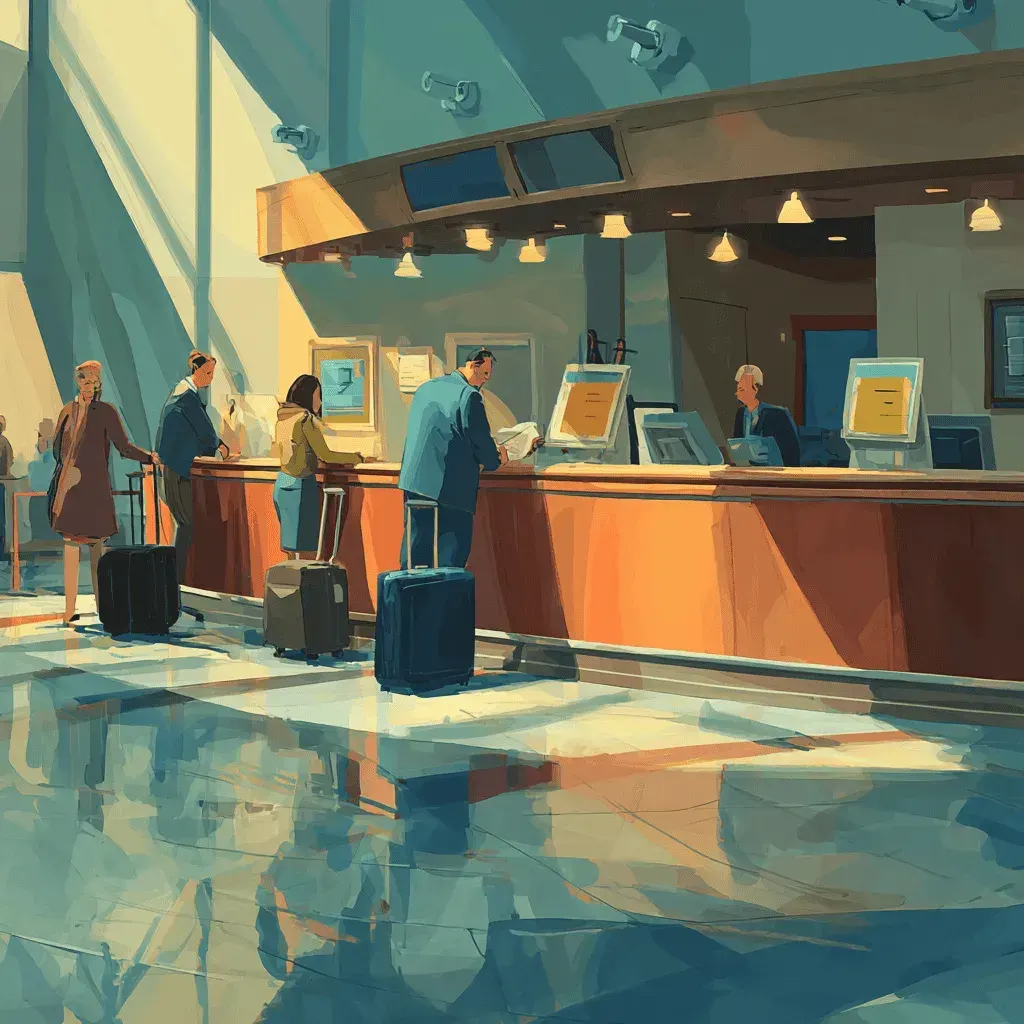
What Rights You Have If You're Bumped From a Flight
Getting bumped from a flight—especially when you’re packed and ready to go—can be a stressful and frustrating experience. However, if this happens to you, it’s important to know that you have legal rights and may be entitled to compensation, rebooking, or even a refund. Whether you give up your seat voluntarily or are bumped against your will, understanding your options can help you turn the situation into a better outcome.
Why Airlines Bump Passengers and the Overbooking Dilemma
Bumping almost always traces back to one core practice: overbooking. Airlines routinely sell more tickets than there are seats on a plane, betting that a predictable percentage of travelers will cancel, miss their flight, or rebook. When the math fails and more passengers show up than anticipated, the airline must adjust the load. Overbooking is legal in most countries, including the United States, because it helps keep fares lower and allows airlines to fill seats that would otherwise go empty. Yet it also creates tense boarding gate scenes when too many passengers check in on time.
Other factors can trigger involuntary bumping even without overbooking. An airline might swap a full-size jet for a smaller regional aircraft due to maintenance, weight restrictions on short runways, or crew unavailability. Operational changes like these can suddenly reduce capacity, forcing gate agents to deny boarding to passengers who had confirmed reservations. In every case, the passenger’s rights hinge on whether they voluntarily surrender their seat or are forced off the plane.
Your Rights at a Glance: The 5-Step Response Checklist
Handling an unexpected bump begins with clarity. Use this quick checklist to take control of the situation, then read on for the detailed strategies and regulations that back up each step.
- Identify whether it’s a voluntary or involuntary bump. The compensation and rebooking obligations differ dramatically between the two.
- Know which regulations apply to your flight. U.S. DOT rules, the European Union’s EC 261, and the international Montreal Convention all set minimum compensation standards.
- Request compensation in cash or check, not just vouchers. Involuntary bumping in many jurisdictions entitles you to immediate monetary compensation at the gate.
- Secure confirmed rebooking and amenities. Ask for a guaranteed seat on the next flight, plus meal vouchers, hotel accommodation, and lounge access if the delay is significant.
- Leverage any travel insurance or credit card protections. Your policy or premium card may add extra cash or cover expenses the airline does not.
Voluntary Bumping: When You Choose to Give Up Your Seat
At the gate, you’ll often hear an announcement offering travel vouchers to anyone willing to take a later flight. This is a voluntary denied boarding scenario. Because you are free to decline, you have significant bargaining power. The initial offer is rarely the airline’s best; carriers often sweeten the deal until enough volunteers step forward.
Before you raise your hand, understand that the compensation package is entirely negotiable. Gate agents have flexibility within internal guidelines, especially on heavily overbooked flights. Your goal is to walk away with benefits that match the inconvenience and the value of your ticket.
What to Ask for in a Voluntary Bump
- Cash or transferable travel vouchers. Some airlines offer both. Cash is obviously more valuable, but a high-value voucher with minimal restrictions can work well if you fly frequently. Clarify whether the voucher can be used for any fare, if blackout dates apply, and how long it’s valid.
- Confirmed, not standby, rebooking. Insist on a confirmed seat on the next available flight. Ask about alternate routes or even flights on partner airlines that might get you to your destination sooner.
- Meal vouchers, hotel stays, and ground transport. If you’ll be delayed for several hours or overnight, the airline should cover reasonable meals and a hotel. In some cases, you can also secure lounge access while you wait.
- An upgrade on the rebooked flight. If you originally flew economy, a move to premium economy or business class is a common perk that volunteers can request.
Pro tip: Get every detail in writing. A quick note on airline letterhead or a clear email confirmation from the gate agent locks in the terms. Vouchers issued at the airport should include the confirmation code, expiration date, and any blackout rules right on the document.
Involuntary Bumping: What Happens When You Are Denied Boarding
If no one volunteers—or not enough volunteers emerge—the airline will select passengers to bump against their will. In the United States, the Department of Transportation (DOT) sets minimum compensation requirements for most domestic and international flights departing from or arriving in the U.S. on U.S. carriers. To qualify, you must meet three baseline criteria:
- You held a confirmed reservation.
- You checked in by the airline’s deadline and arrived at the gate before the boarding cutoff.
- The bump was not caused by weather, air traffic control decisions, safety risks, or other events outside the carrier’s control.
U.S. DOT Compensation Guidelines
When an airline involuntarily denies you boarding on a flight that was oversold and you meet the criteria above, you are owed immediate compensation. The amount is tied to the one-way fare you paid (including taxes and fees) and the length of the delay in reaching your destination. The DOT enforces these minimums, and the airline must offer you a written notice of your rights at the gate.
| Arrival Delay | Compensation |
|---|---|
| 0–1 hour | $0 |
| 1–2 hours (domestic) 1–4 hours (international) |
200% of one-way fare, up to $775 |
| 2+ hours (domestic) 4+ hours (international) |
400% of one-way fare, up to $1,550 |
Note: The caps are periodically adjusted for inflation. The dollar amounts shown reflect current DOT maximums but can change. Always check the latest figures on the U.S. Department of Transportation’s Fly Rights page.
Importantly, the compensation must be offered at the airport in cash or an immediately negotiable check, not just a travel voucher. You can still accept a voucher if the airline offers one and you prefer it, but you are under no obligation to do so. If the gate agent tries to hand you a voucher as the only option, politely request your cash alternative.
How to Claim Your Compensation
If the airline rebooks you automatically and you depart, you may need to follow up later to receive your check. Insist on obtaining a written statement that confirms the involuntary denied boarding, your original flight, the arrival delay, and the promised monetary amount. Then file your claim with the airline’s customer relations department, referencing that document. The DOT expects airlines to pay claims within a reasonable timeframe; if you don’t receive what you are owed, you can file a complaint directly with the DOT.
What Airlines Must Provide in Addition to Cash
Cash compensation is your legal right, but airlines also have an obligation to take care of you during the delay. Whether you are bumped voluntarily or involuntarily, you should receive:
- A written notice that explains your rights and the reason for denied boarding. Keep this document.
- Rebooking on the next available flight at no extra cost. The airline must get you to your final destination as soon as possible, even if that means booking you on another carrier.
- Meal vouchers for delays lasting more than a few hours. For overnight delays, the airline should also provide a hotel room and transportation to the hotel.
- Access to airport amenities like phone calls or Wi-Fi if needed.
Being proactive helps. Simply asking for meal vouchers or a hotel room is usually enough, as gate agents are trained to offer these once a delay is confirmed. If you don’t receive them automatically, politely request what you need.
When You Are Not Entitled to Compensation: Exceptions and Loopholes
Not every bump leads to a payday. Several scenarios can zero out your claim:
- No significant delay. If the airline rebooks you and you arrive at your destination within one hour of your original schedule on a domestic flight (or within four hours for international), no compensation is owed under U.S. rules.
- Free or heavily discounted tickets. Passengers traveling on frequent flyer award tickets without any cash co-pay are generally excluded from involuntary denied boarding compensation. Some airlines may offer a goodwill gesture, but they are not required by law to do so.
- Safety or aircraft change. A gate agent denies boarding because of a last‑minute aircraft swap for safety reasons—such as a mechanical issue that forces the use of a smaller plane—then DOT compensation does not apply.
- Charter flights and small aircraft. Flights operated by aircraft with fewer than 30 seats and some charter operations are not covered by the DOT’s overbooking rule.
- You missed the check‑in or boarding deadline. Even with a confirmed ticket, late arrival at the gate voids your right to compensation for bumping.
International Protections: DOT, EC 261, and the Montreal Convention
Your rights grow even more complex when you cross borders. Multiple legal frameworks can apply, and understanding them can significantly increase what you are owed.
EC 261 for Flights to, From, or Within Europe
If you are flying on any airline departing from an airport in the European Union (or arriving in the EU on an EU‑registered carrier), the EC 261/2004 regulation imposes strict obligations for denied boarding. Unlike U.S. rules, EC 261 does not require overbooking as the trigger; if you are denied boarding for any reason within the airline’s control, you qualify. The compensation is fixed based on flight distance:
- Up to €250 for flights of 1,500 km or less.
- Up to €400 for flights between 1,500 km and 3,500 km.
- Up to €600 for flights over 3,500 km (non‑intra‑EU).
Additionally, the airline must offer re‑routing, meals, refreshments, and accommodation if an overnight stay becomes necessary. Many passengers accidentally leave money on the table because they are unaware that EC 261 complements or even exceeds U.S. compensation. You can claim under both the DOT rules and EC 261 when your itinerary qualifies. For full details, consult the official European Union passenger rights site.
Montreal Convention for Intercontinental Travel
The Montreal Convention is a treaty governing international carriage by air that sets liability limits for a range of passenger injuries, including delays. While it doesn’t provide the neat, fixed‑amount compensation chart of the DOT or EC 261, it allows passengers to seek damages for losses actually suffered as a result of denied boarding, up to approximately 1,288 Special Drawing Rights (around $1,700–$1,800 USD, fluctuating with exchange rates). This route is useful if you incur significant out‑of‑pocket costs—like a missed cruise or non‑refundable hotel night—that go beyond the basic compensation formulas. Because the Montreal Convention focuses on actual damages, you will need receipts and clear documentation to support a claim. The Cornell Legal Information Institute offers a clear overview of the convention’s scope and limitations.
Step-by-Step Guide: What to Do If You’re Bumped
When the gate agent calls your name because the flight is overbooked, your reaction can shape everything that follows. Use this methodical approach to protect your wallet and your trip.
- Stay calm and separate voluntary from involuntary. Ask directly: “Is this a volunteer request or am I being involuntarily denied boarding?” The answer instantly determines your strategy.
- Request the written statement of rights. U.S. airlines are required to hand you a document that spells out your eligibility for compensation. Review it and snap a photo with your phone.
- Negotiate for voluntary bumps. If you’re comfortable delaying, ask what the airline can offer beyond the initial voucher. Don’t be afraid to counter. Mention that you know cash is an option under involuntary rules—this sometimes prompts a better offer.
- Demand cash if bumped involuntarily. Politely but firmly state that you are owed monetary compensation calculated according to the DOT’s formula (or EC 261, if applicable). If the agent insists on a voucher, ask to speak with a supervisor.
- Secure confirmed rebooking immediately. Don’t leave the gate without a new boarding pass for a guaranteed seat. Explore alternative airports and partner airlines to shorten your wait.
- Collect all amenity vouchers. For any delay beyond a couple of hours, ask for meal vouchers and, if necessary, a hotel voucher. Use them before you leave the airport—unused vouchers can be hard to replace later.
- Document everything. Note the names of gate agents, times, flight numbers, and the reason given for the bump. Save all boarding passes, receipts, and the written notice. This paper trail is invaluable if you need to file a complaint.
- File a follow‑up claim if required. If you didn’t receive your cash compensation on the spot, submit a claim to the airline’s customer relations department within 30 days, attaching your documentation. Escalate to the DOT or national enforcement body if the airline doesn’t respond appropriately.
Insider strategy: Gate agents are under intense pressure to solve the oversale quickly. A passenger who is cooperative but firm often walks away with a better package than someone who becomes confrontational. Use your knowledge of the rules to steer the conversation, not to argue.
Boost Your Protections with Travel Insurance and Premium Credit Cards
Even if you collect the maximum cash compensation from the airline, your travel plans may still suffer a financial hit. This is where travel insurance policies and premium credit card benefits fill the gaps. Many comprehensive plans offer trip interruption or delay coverage that pays a fixed amount when a bump causes a lengthy delay—often $200 to $500 per day, up to a set limit. This is in addition to, and separate from, airline compensation.
Several high‑end travel reward cards include valuable trip delay reimbursement as a built‑in perk. Cards such as the Chase Sapphire Reserve or the Capital One Venture X, for example, provide coverage for unexpected overnight delays, reimbursing you for meals, lodging, and ground transportation when the airline doesn’t foot the bill. To activate that coverage, you typically need to have paid for the flight with the card (or with points from that card) and retain documentation of the denied boarding. If you’re unsure of your card’s benefits, check the guide to benefits that came with your card or call the number on the back of the card before your trip.
Standalone travel insurance policies, particularly those from reputable comparison sites like Consumer Reports’ travel insurance buying guide, can also add trip cancellation or missed connection coverage that kicks in when a bump causes you to abandon your trip or miss a subsequent prepaid tour. Always read the fine print to confirm that denied boarding is a covered reason.
Frequently Asked Questions About Flight Bumping
- Can the airline bump me even if I have a seat assignment?
- Yes. A seat assignment is not a guarantee of boarding. If the flight is overbooked, you can still be denied boarding even though the boarding pass shows a seat number.
- Do I have to accept a travel voucher instead of cash?
- No. For an involuntary bump, U.S. law entitles you to cash or a check. Vouchers are acceptable only if you voluntarily choose them over cash.
- What if I miss a connecting flight because I was bumped?
- The airline is responsible for rebooking you through to your final destination at no extra cost. If the resulting delay extends beyond the compensation thresholds, you may also be owed additional cash compensation for the overall delay.
- Am I protected if I am bumped from an award ticket?
- Usually not. DOT rules and EC 261 exempt passengers traveling on free tickets from the monetary compensation requirements. However, the airline still owes you rebooking and duty-of-care amenities, and it’s worth asking for a goodwill voucher.
- I was involuntarily bumped but the airline says it wasn’t due to overbooking. What are my rights?
- If the bump was caused by a force majeure event (weather, air traffic control, security) or an aircraft change for safety, U.S. DOT cash compensation does not apply. You may still be entitled to rebooking and care, and if the flight touches Europe, EC 261 might provide compensation regardless.
- Is it possible to negotiate a better compensation package after I already accepted a voucher?
- Once you voluntarily accept a voucher and sign any release, you typically waive further claims. That’s why it’s essential to negotiate and review all terms before you agree.
Final Thoughts
Being bumped from a flight can feel like the airline holds all the cards—but that’s far from true. By understanding the stark difference between voluntary and involuntary denied boarding, knowing the precise compensation formulas from the DOT or EC 261, and demanding what you are owed in the correct form, you turn an inconvenience into a recovery of value. Keep this guide handy as a travel companion. When the gate agent makes that announcement, you will know exactly which questions to ask and how to secure not just a later flight, but the full package of compensation, care, and re‑routing that the law provides. Knowledge is leverage, and in the unexpected chaos of a bump, leverage is everything.