Table of Contents
The Lifesaving Legacy of Black Boxes
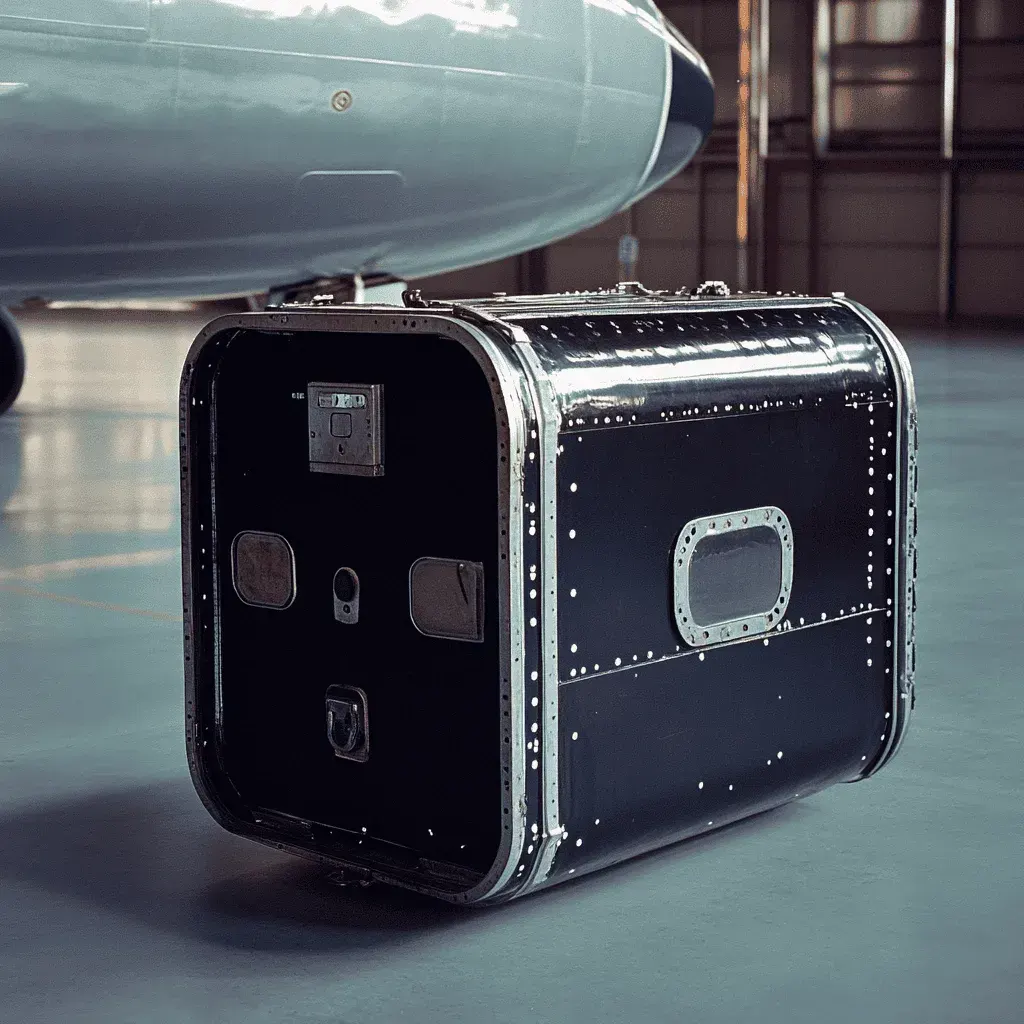
When an aircraft falls from the sky, the mangled wreckage that remains on a runway, a mountainside, or the ocean floor rarely tells the full story. The physical evidence—bent aluminum, shattered engines, scattered personal effects—can hint at what happened, but it cannot reveal the precise sequence of human decisions and mechanical failures that led to catastrophe. That critical narrative lives inside two armored, fire‑proof, brilliantly orange cylinders mounted in the tail of every commercial airliner: the Flight Data Recorder (FDR) and the Cockpit Voice Recorder (CVR). Universally known as “black boxes,” these devices are the silent, steel‑willed witnesses that survive impacts, fires, and crushing ocean pressures to deliver the truth.
The term “black box” is borrowed from systems engineering, where a device’s internal workings are opaque and only its inputs and outputs are observed. In aviation, the recorders are anything but black—they are painted international orange with reflective tape to stand out against debris. Yet the nickname endures because they remain the ultimate mystery solvers, translating raw data and cockpit voices into a forensic account that investigators, regulators, and grieving families rely on. Since their rudimentary beginnings in the 1950s, flight recorders have evolved from simple metal‑foil scribes to solid‑state supercomputers that capture thousands of parameters per second. This article explores how black box technology is engineered, how investigators extract meaning from mangled memory chips, the landmark accidents they have decoded, and the next‑generation innovations that promise to make flight recording even more unassailable.
The Dual‑Heart System: FDR and CVR
Modern black boxes are not a single device but two independent units that complement each other. The Flight Data Recorder focuses on the aircraft’s physical state; the Cockpit Voice Recorder captures the human dimension. Together they build a synchronized, multi‑sensory reconstruction of any flight’s final moments. Both are installed as far aft as possible—in the tail—because that section statistically absorbs the least impact energy and is most likely to survive a crash intact. International standards set by the International Civil Aviation Organization (ICAO) mandate their carriage on virtually all commercial transport aircraft, ensuring every flight above a certain weight or passenger capacity is fitted with this dual witness.
The Flight Data Recorder (FDR)
An FDR is an electronic diary of the aircraft’s systems, performance, and environment. In the 1960s, first‑generation devices scratched five basic parameters—altitude, airspeed, heading, vertical acceleration, and time—onto a rolling strip of metal foil. Today’s solid‑state recorders, governed by the Federal Aviation Administration (FAA) in the United States, must monitor at least 88 parameters, but most modern airliners capture well over 2,000 distinct data streams. These cover every movable flight control surface, each engine’s health, the entire autopilot and flight management computer dialogue, and dozens of system pressures and temperatures.
Among the hundreds of recorded signals, investigators closely scrutinize:
- Flight control positions: The exact deflection angle of the control column, wheel, rudder pedals, and all primary surfaces—ailerons, elevators, rudder—revealing pilot intent versus actual surface movement.
- Engine performance parameters: Thrust lever angle, fuel flow, exhaust gas temperature, rotor speeds (N1/N2), and vibration signatures for each engine, which can point to bird ingestion, compressor stall, or uncontained failure.
- Autopilot and auto‑throttle commands: When pilots engage automated systems, the FDR logs every mode change, altitude preselect, heading bug shift, and vertical speed target, showing how and when the aircraft’s brain was directing the flight.
- Environmental and navigation data: Outside air temperature, static pressure, wind speed and direction (derived from air‑data computers), GPS coordinates, and even the indicated angle of attack—a critical value that figured prominently in recent crashes.
All these measurements are time‑stamped at intervals as short as every 1/16th of a second for fast‑changing parameters. This high‑frequency sampling allows investigators to rebuild a 3‑D animation of the aircraft’s trajectory, superimposing it on topographical maps and radar tracks to visualize the flight in extraordinary detail.
The Cockpit Voice Recorder (CVR)
No list of sensor readings can convey the stress, teamwork, or confusion inside a cockpit during an emergency. The CVR fills that gap by continuously recording the auditory cockpit environment. Modern units preserve four separate audio channels for a minimum of two hours, looping over themselves so that only the last portion of the flight is kept—though upcoming regulations will extend this to 25 hours. The channels include:
- Pilot and co‑pilot microphones: Every word spoken through boom mics and oxygen masks, plus any inter‑cockpit conversation.
- An area microphone: Mounted in the overhead panel, this picks up ambient sounds such as engine spooling, stall‑warning horns, autopilot disconnect chimes, ground‑proximity alerts, and even the subtle clicks of switches being toggled.
- A third crew or observer microphone: If a relief pilot or inspector occupies the jump seat, that audio is recorded independently.
- Public address system audio: Captures announcements from the cockpit to the cabin, which sometimes reveal the crew’s intentions before an emergency becomes apparent.
Accident analysts listen for the cadence of pilot callouts, response times to alarms, and any background sounds that could indicate explosive decompression, structural breakup, or spatial disorientation. A sudden drop in background engine noise followed by a stall warning, for instance, can confirm an aerodynamic stall—sometimes even before FDR plots are reviewed. Together, the FDR and CVR transform a chaotic sequence of events into a coherent cause‑and‑effect timeline.
Engineered to Survive the Unsurvivable
The data inside these recorders would be worthless if the units themselves were destroyed by a high‑velocity impact, a raging post‑crash fire, or deep‑sea immersion. Consequently, black boxes are built to withstand forces that would vaporize almost any other piece of avionics. Their outer shell is typically a hardened cylinder or sphere of stainless steel or titanium, enclosing a thick thermal insulation blanket and a solid‑state memory core. This core, called the Crash Survivable Memory Unit (CSMU), is the heart that must remain intact at all costs.
The survivability standards for CSMUs are defined by the National Transportation Safety Board (NTSB) and ICAO, and they are extreme:
- Impact shock: The module must survive a 3,400 G impact—equivalent to coming to a dead stop from 310 mph in about 18 inches. This is tested by firing the unit from a cannon into a stone wall.
- Penetration resistance: A 500‑pound steel spike dropped from a height of 10 feet must not pierce the memory chip cavity.
- Fire protection: The CSMU endures flames at 1,100 °C (2,012 °F) for 60 minutes, followed by a lower‑intensity burn at 260 °C (500 °F) for 10 hours. This simulates the pool of burning jet fuel that often consumes a crash scene.
- Deep‑sea immersion: It must remain watertight at pressures of over 8,500 psi—equivalent to a depth of 20,000 feet—for at least 30 days.
Each recorder also carries an Underwater Locator Beacon (ULB) attached to its bracket. When immersed in either fresh or salt water, the ULB activates automatically and emits an ultrasonic 37.5 kHz pulse once per second for a minimum of 30 days. Search vessels tow hydrophone arrays to detect these pings, and the distinctive sound signature can be heard from several miles away. However, the 30‑day battery life has been a controversial limitation, especially after the disappearance of Malaysia Airlines Flight MH370, where the pingers likely expired before the search could be mounted in earnest. Newer regulations are requiring 90‑day pinger endurance, and alternative location technologies are being pursued.
The Delicate Art of Data Recovery and Interpretation
Once the black boxes are retrieved—often after delicate deep‑sea salvage or careful sifting through acres of shattered metal—they are transported to specialized laboratories like those operated by the NTSB in Washington, D.C., the Bureau d’Enquêtes et d’Analyses (BEA) in France, or equivalent agencies worldwide. Even if the recorders appear mangled on the outside, the CSMU is often remarkably intact. Technicians begin with a meticulous external inspection, photographing every scar and dent to document impact angles. They check for residual electrical charge to prevent short circuits and then painstakingly unbolt the memory module from its protective layers.
The silicon flash memory chips inside may look pristine or may be visibly cracked, yet recovery is frequently possible. Engineers use chip‑off forensics: they desolder each memory chip and install it on a donor board to read raw binary data. Corrupted sectors are bypassed, and error‑correction algorithms rebuild the original flight data files. Even when chips are mechanically fractured, a scanning electron microscope and micro‑probe station can sometimes extract enough voltage states to piece together the data.
Once the raw bitstream is obtained, it is fed into analysis software that translates each hexadecimal value into meaningful engineering units—degrees of flaps, pounds of fuel per hour, knots of airspeed. Investigators then synchronize the FDR timeline with the CVR audio track, a painstaking process that aligns spoken words with recorded parameters within a hundredth of a second. The result is a multimedia reconstruction that can be replayed in a simulation environment. During a typical readout session, representatives from the airline, aircraft manufacturer, engine maker, and regulatory body all observe the same screens, ensuring that no single party colours the interpretation.
This collaborative approach yields a narrative that is accepted worldwide. For example, when the FDR showed that the autopilot on Air France 447 disconnected and the aircraft entered a stall, the CVR revealed the pilots’ simultaneous confusion and their contradictory stick inputs—details that would have been impossible to infer from data alone.
Landmark Investigations Illuminated by Black Box Data
The practical value of black box technology is etched into aviation history through the disasters it has helped decode. Each tragedy produced lessons that led to sweeping changes in aircraft design, pilot training, and operational rules.
Air France Flight 447 (2009)
When an Airbus A330‑200 vanished over the South Atlantic with 228 people aboard, no distress call was made, and only a burst of automatic maintenance messages hinted at trouble. The search took nearly two years and scoured 17,000 square kilometres of seabed before the recorders were found at 3,900 metres. FDR readings revealed that ice crystals had temporarily blocked the aircraft’s pitot tubes, leading to inconsistent airspeed indications and autopilot disengagement. The CVR captured a crew overwhelmed by the sudden loss of reliable speed data, a high‑altitude aerodynamic stall, and crucially, the co‑pilot’s sustained nose‑up control input that exacerbated the stall. The findings triggered a redesign of pitot tube heating elements and a global overhaul of high‑altitude stall recovery training, emphasizing the importance of reducing angle of attack rather than simply adding power.
Germanwings Flight 9525 (2015)
The crash of an A320 into the French Alps, killing all 150 people onboard, was initially thought to be a structural failure. Recovery teams braved steep, rocky terrain to extract the CVR, which delivered a harrowing narrative: the co‑pilot locked the captain out of the cockpit, set the autopilot to descend, and ignored frantic pounding on the reinforced door. The FDR confirmed the controlled descent at a selected altitude of 100 feet, followed by impact. As a direct result, aviation authorities worldwide mandated that at least two authorized crew members be present on the flight deck at all times—a simple but life‑saving rule change that might have prevented the tragedy.
Lion Air Flight 610 (2018) and Ethiopian Airlines Flight 302 (2019)
Both Boeing 737 MAX 8 aircraft crashed within minutes of takeoff, together claiming 346 lives. The FDRs showed that a single angle‑of‑attack sensor fed erroneous data to the Maneuvering Characteristics Augmentation System (MCAS), which repeatedly pushed the nose down despite pilots’ efforts to restore control. The CVRs captured the crews struggling to identify the runaway trim and consulting emergency checklists in a race against time. The evidence from these two black boxes led to a 20‑month worldwide grounding of the 737 MAX, a fundamental redesign of MCAS to require dual sensor inputs and limit its authority, and heightened scrutiny of aircraft certification processes. Without the recorders, the problem might have been misattributed to maintenance or pilot error, leaving the design flaw uncorrected.
In every case, black boxes transformed tragedy from a chaotic unknown into an understandable chain of events, enabling targeted fixes that made the entire fleet safer.
Persistent Challenges: Finding and Recovering the Recordings
Despite their ability to withstand incredible forces, black boxes are useless if they cannot be located. Accidents over remote ocean expanse present the greatest challenge. The ULB’s limited 30‑day battery pinger window requires search forces to arrive on station quickly and cover enormous areas with towed sonar. The hunt for Air France 447 took two years partly because the pingers had long since gone silent; only a methodical probabilistic survey using side‑scan sonar and autonomous underwater vehicles found the wreckage.
Malaysia Airlines Flight MH370, which disappeared in 2014 with 239 people onboard, remains the most infamous example of a recovery failure. No black box signal was ever detected, and the recorders are presumed to lie deep in the Indian Ocean, their ULBs long dead. Without them, the cause of the disappearance is still unknown, illustrating the critical vulnerability of current technology. Even on land, high‑velocity impacts can scatter debris and recorders over miles of rugged terrain, as seen in the crash of Germanwings 9525, where the CVR was initially lost beneath snow and rock.
Search methods are improving. Next‑generation ULBs with 90‑day battery life are being mandated for new installations. More significantly, manufacturers are testing deployable flight recorders that separate from the aircraft at the moment of impact or breakup. These self‑contained units float on water, transmit GPS coordinates, and carry their own pinger and radio beacon, dramatically shrinking the search area. Airbus and L3Harris have both built prototypes, and although full fleet integration is years away, the technology represents a paradigm shift from “find the wreckage” to “find the black box that found you.”
The Cutting Edge: Real‑Time Streaming and AI Analysis
The most radical transformation on the horizon is the move from physical recording to live data streaming. Conceptually, an aircraft could transmit a continuous, encrypted stream of critical FDR parameters to ground servers whenever an emergency or deviation from normal flight is detected. This “black box in the cloud” would eliminate the ocean‑search problem entirely: even if the aircraft is lost, the data would already be housed securely on the ground. Bandwidth costs, satellite coverage, and cybersecurity concerns have slowed implementation, but ICAO and airframers are studying selective streaming for extended‑range over‑water flights. In a phased approach, trigger events such as engine failure or rapid decompression could initiate a burst transmission of the most vital data, preserving the flight’s digital footprint without saturating satellite links.
Cockpit voice recording is also evolving. Moving from a two‑hour loop to a 25‑hour continuous recording will give investigators access to an entire crew duty day, not just the final minutes. This longer window can reveal subtle clues: cumulative fatigue patterns, earlier conversations that expose training gaps, or decisions made hours before the crash that gradually narrowed the safety margin. Voice data itself is becoming smarter. Artificial intelligence algorithms can now ingest CVR audio and automatically flag unusual speech cadence, hurried or omitted checklists, whispered conversations, or even nonverbal distress sounds.
Combined with FDR streams, AI‑driven analysis could highlight incipient failure chains even before human investigators begin their work, accelerating the investigation process and surfacing risks that might otherwise be overlooked.
Another ongoing innovation is the integration of Emergency Locator Transmitters (ELTs) directly into the CSMU housing. Traditional ELTs are separate devices that often detach or are destroyed in a crash. By embedding an ELT with GPS and a 406 MHz satellite notification capability inside the black box, rescue authorities can receive an immediate distress alert and a position fix within minutes, independent of the underwater pinger. This closes the critical gap between impact and the start of an underwater search.
The Safety Feedback Loop That Never Stops
The data locked inside black boxes is never just historical. Every investigation feeds directly into a continuous improvement cycle that raises the baseline of aviation safety. The Air France 447 recorders not only resulted in pitot tube redesigns, but also changed simulator training checklists to include “unreliable airspeed” scenarios and high‑altitude stall recovery techniques worldwide. The Germanwings CVR spurred revised cockpit‑door policies and psychological screening protocols. The MAX tragedies rewired how automated systems are validated and how pilots are notified of their existence.
These changes, born from black box evidence, directly reduce the likelihood of a repeat event. The global airline safety record over the past two decades—where fatal accident rates have fallen to all‑time lows—is partly a testament to the power of this technology.
Equally important, black boxes provide an unassailable, objective record that families and the public demand. They answer the question “Why?” and give meaning to lives lost, often influencing civil lawsuits, corporate accountability, and government policy. Without the hard evidence of a CVR exchange or an FDR plot, tragedy would be shrouded in speculation and suspicion, making lasting safety improvements difficult to justify.
Why the Orange Cylinders Will Never Disappear
Even as real‑time streaming and deployable modules become standard, the core function of the flight recorder will remain unchanged: to preserve the truth of what happened onboard, no matter how catastrophic the outcome. The FDR and CVR, or their technological descendants, will always serve as the final, incorruptible word. They are the data sources that bring clarity to chaos, turning twisted wreckage into lessons that keep millions of passengers safe every day. As aircraft increasingly become flying data centers, the black box—in whatever form—will continue to be the most honest witness in the sky.