Table of Contents
Booking a Flight with a Dog or Cat? A Complete Walkthrough of KLM’s 2025 Pet Rules
If you’re planning to fly with a dog, cat, or service animal in 2025, KLM Royal Dutch Airlines offers several clear paths—from under‑seat carriers to dedicated cargo flights. Knowing exactly which option your pet qualifies for, how to prepare the paperwork, and what fees to expect can prevent last‑minute boarding denials and reduce stress for both you and your animal. This detailed guide covers every element of KLM’s pet policy, including weight limits, breed bans, health documentation, and transit facilities, so you can book with confidence.
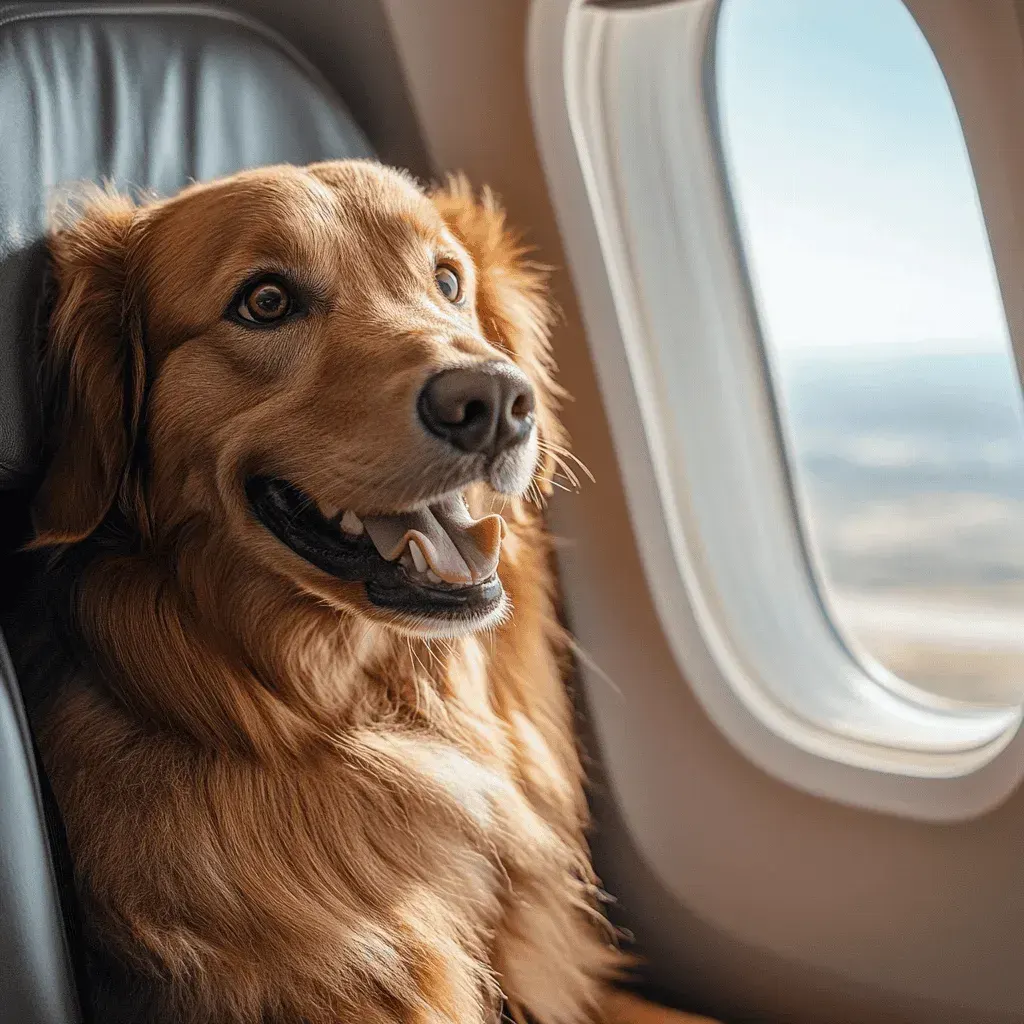
Which Travel Method Your Pet Needs
KLM sorts animal transport into three categories, and your choice is determined entirely by weight, breed, and destination regulations:
- In‑cabin (hand baggage). For small cats and dogs whose combined weight with their carrier does not exceed 8 kg (17.6 lb). The animal stays with you under the seat.
- Checked baggage (aircraft hold). For pets over 8 kg but no more than 75 kg (165 lb) when weighed with their travel kennel. The hold is pressurized and temperature‑controlled.
- KLM Cargo. Mandatory for any animal‑and‑kennel combination heavier than 75 kg, for all snub‑nosed breeds, and for countries that legally require cargo‑only pet import (e.g., the UK, Ireland, Australia, New Zealand, South Africa, and several Caribbean islands). Cargo‑handled pets fly on the same aircraft or on freighters, and they have access to KLM’s on‑airport animal facilities.
Service dogs are an exception: they travel in the cabin free of charge regardless of weight, as long as valid documentation is provided.
In‑Cabin Pets: Rules, Carriers, and Reservations
Weight and Species Limitations
Only domestic cats and dogs are accepted in the passenger cabin. KLM ground staff will weigh the pet inside its carrier at check‑in; the total must be 8 kg or less. Most soft‑sided carriers weigh about 1 kg, meaning the animal itself typically needs to be under 7 kg. Puppies and kittens may meet this limit, but adult dogs of many breeds will be too heavy.
Carrier Size and Construction
The closed carrier must slide fully under the seat in front of you and cannot exceed 46 cm long × 28 cm wide × 24 cm high (18 in × 11 in × 9 in). KLM prefers soft‑sided bags because they offer a bit of flexibility, but rigid carriers that fit those exact dimensions are also accepted. Inside, your pet must be able to stand, turn around, and lie down naturally. Any carrier with wheels must have them removed or firmly locked.
How to Reserve and Pay
You must add the in‑cabin pet to your booking at least 48 hours before departure. Call KLM’s customer service or, where available, use the “Manage My Booking” tool online. Each passenger may bring only one carrier; on most flights, the airline caps the number of cabin pets at three to four in Economy and often prohibits them entirely in Business Class on intercontinental routes. Fees for cabin pets range from €75 to €200 each way, with short European trips at the lower end and long‑haul flights at the upper end.
Route‑Specific Cabin Bans
Several destinations ban in‑cabin pet travel entirely on inbound flights. This applies to the United Kingdom, Ireland, South Africa, and a number of other countries. In such cases, even a 2 kg cat must travel as cargo. Always verify your destination’s rules on KLM’s country‑specific pet information page well before booking.
Checked Baggage: Pets in the Hold
Kennel Requirements
Pets exceeding 8 kg (with carrier) but under 75 kg are checked as excess baggage and loaded into the forward or aft cargo hold, which maintains the same temperature and pressure as the passenger cabin. You must use a hard‑sided, IATA‑compliant travel crate made of rigid plastic, metal, or wood. The kennel must have secure metal fasteners (no plastic snaps), ventilation on at least three sides, a leak‑proof floor covered with absorbent bedding, and doors that lock. Wheels must be removed or rendered inoperable.
Temperature‑Related Embargoes
KLM will not accept a checked pet if the ground temperature at any point along the journey—origin, transfer, or destination—is outside a safe window, usually below 10 °C (50 °F) or above 29 °C (85 °F). During hot summer spells or deep cold snaps, only early‑morning or late‑evening flights may be approved. If you are connecting through a hub with extreme weather, the airline may re‑route your pet or postpone travel.
Reservation Timing and Airport Procedures
Checked pets must also be booked at least 48 hours ahead. On the day of travel, plan to arrive three hours before departure. You’ll complete a live‑animal acceptance checklist and present health documents at the oversized baggage counter. The fee for checked pets ranges from €100 to €400 per direction, depending on route and combined weight.
Cargo Transport: When Your Pet Needs KLM Cargo
Why Cargo Is Required
Any dog or cat whose total traveling weight (with kennel) exceeds 75 kg automatically moves through KLM Cargo. Cargo is also mandatory for all brachycephalic breeds, for any powerful breed that must travel in a reinforced crate, and for countries that legally prescribe cargo‑only import (the UK, Ireland, Australia, New Zealand, South Africa, Singapore, Hong Kong, and certain Caribbean nations). KLM Cargo operates a dedicated Animal Hotel at Amsterdam Schiphol Airport, with climate‑controlled rooms, outdoor exercise areas, and trained animal attendants to care for pets during layovers.
Kennel and Paperwork Standards
Cargo‑bound pets still need an IATA‑compliant rigid crate, but additional reinforcement (steel door locks, extra “Live Animal” labeling, and a feeding schedule sheet taped to the container) is usually mandatory. You must supply original health certificates, import permits if required, and full vaccination records. For many high‑compliance countries, you will also need a certified freight forwarder, though KLM Cargo’s team can advise you directly on customs clearance.
Booking a Cargo Shipment
Cargo bookings should be made at least seven days before departure due to extensive regulatory checks. Charges are based on the dimensional weight of the kennel, the route distance, and any additional services such as extended holding. Contact KLM Cargo for a personalized quote; expect a starting point around €250 and increasing with size and destination.
Breed Restrictions and Special‑Handling Policies
Brachycephalic (Short‑nosed) Breeds
Dogs and cats with flattened faces face a dangerously high risk of respiratory distress in the aircraft hold due to heat and stress. As a result, KLM completely bans the following breeds from traveling as checked baggage or cargo:
- Dogs: English Bulldog, French Bulldog, American Bulldog, Pug, Boston Terrier, Boxer, Shih Tzu, Pekingese, Japanese Chin, King Charles Spaniel, and any mix exhibiting those traits.
- Cats: Persian, Himalayan, Exotic Shorthair.
These animals may fly only in the cabin if the 8 kg weight limit is met. If a snub‑nosed pet is too heavy, it cannot travel with KLM at all. Ground staff and veterinary consultants may deny boarding to mixed‑breed animals with visibly brachycephalic features, even if the breed is not explicitly listed.
Powerful and Guard‑Class Breeds
Certain breeds, including Pit Bull Terriers, American Staffordshire Terriers, Rottweilers, Mastiffs, Dogo Argentinos, and Fila Brasileiros, are not banned but must travel as KLM Cargo in a reinforced kennel. The crate must be heavy‑gauge plastic or metal with secure double‑door locks, and the dog may be required to wear a muzzle during loading and unloading.
Service Animals vs. Emotional Support Animals
Only service dogs trained to perform specific tasks for a person with a disability are recognized. They fly in the cabin at no cost on all KLM routes. You must present a valid training certificate and health documentation, including proof of rabies vaccination, at least 48 hours before departure. The dog must be harnessed and remain on the floor at your feet; it is not allowed on a seat. As of 2021, KLM no longer recognizes emotional support animals (ESAs) as a separate category—they are treated as regular pets, subject to normal fees and travel rules.
International Health and Import Documentation
European Union Travel
For travel within the EU or returning to the EU from a non‑EU country, your pet must have a European Pet Passport (or an equivalent EU animal health certificate). The passport needs to show a microchip number (implanted before the rabies vaccination), a valid rabies vaccination administered at least 21 days before departure, and, when entering certain countries like Finland, Ireland, or Malta, a record of tapeworm treatment given between 120 and 24 hours before entry. Verify updates on the European Commission’s pet travel page.
United States, Canada, and Mexico
For dogs entering the United States, the USDA APHIS currently requires a veterinary health certificate endorsed by a USDA‑accredited vet within 10 days of travel. Cats generally need only a fit‑to‑fly certificate for airline acceptance, though some states impose additional requirements. Canada asks for a bilingual rabies vaccination certificate, while Mexico demands a health certificate no older than 15 days. Because import rules for dogs from high‑risk rabies countries can change quickly, double‑check with the local embassy or consulate shortly before your trip.
United Kingdom, Ireland, and Other Island Nations
Pets flying into the UK or Ireland must arrive as manifested cargo on an approved route. You will need to engage an authorized pet shipper, provide a health certificate signed by an official government veterinarian, and show proof of microchip, rabies vaccination, and (for dogs) tapeworm treatment. Similar cargo‑only and document‑intensive procedures apply to Singapore, Hong Kong, and many Caribbean islands. Start planning at least three months ahead.
Australia, New Zealand, and High‑Quarantine Destinations
These countries enforce a minimum 10‑day quarantine period, and pre‑travel processes—including rabies titer tests, import permits, and parasite treatments—can take up to six months. KLM transports pets to these destinations exclusively through its cargo division, and you must work with an accredited pet relocation specialist. Refer to the Australian Department of Agriculture or the New Zealand Ministry for Primary Industries for the most current entry standards.
Health Certificate and Veterinary Checks
Regardless of travel method, KLM requires a valid health certificate issued within 10 days of departure (some countries shorten this to 48 hours). The certificate must confirm that your pet is free of infectious diseases, is fit to fly, and has current vaccinations. A separate rabies vaccination certificate is mandatory for all international journeys. If the animal appears ill, overly anxious, or aggressive at the airport, KLM staff are authorized to refuse boarding for safety reasons.
Your Pet Travel Preparation Timeline
Four to Six Weeks Before the Flight
- Have your veterinarian perform a general wellness exam, update the rabies vaccination if needed, and scan the microchip to ensure it reads correctly.
- Research destination import requirements. Order any necessary blood tests (e.g., rabies titer for Japan or Australia).
- Purchase an IATA‑compliant kennel and begin crate training: leave the door open at home, place meals and treats inside, and gradually close the door for short periods so the pet associates the crate with comfort.
- Start collecting documents: microchip implantation record, vaccination certificates, and any pre‑approval letters from destination authorities.
One Week Before Departure
- Finalize the pet’s booking by calling KLM (make sure you receive a booking reference specifically for the animal).
- Obtain the health certificate from your vet. If the destination requires a government endorsement (e.g., USDA stamp for the U.S.), schedule that appointment early in the week.
- Label the crate with your name, phone number, flight details, and “Live Animal” decals. Secure an absorbent pad inside and pack an extra mat for long flights.
- Allow your pet to explore the finished kennel for a few minutes each day, and consider using a calming pheromone spray (such as Adaptil or Feliway) inside the carrier.
The Day of the Flight
- Give your pet a light meal three to four hours before check‑in, and limit water to small sips to reduce motion sickness.
- Provide a thorough walk or play session early in the day so your pet is tired and more relaxed.
- Arrive at the airport at least two hours before departure for in‑cabin pets and three hours for checked pets.
- Present all documents—health certificate, vaccination records, import permits—at the check‑in counter. Pay the pet fee by credit card or, where offered, pre‑pay online to save time.
Layovers, Transit, and On‑Board Care
In‑Cabin Pets During Flights
The carrier must stay closed and stowed under the seat for the entire flight, including during turbulence. You cannot remove the animal inside the airport terminal or on the aircraft. If you have a layover longer than two hours, KLM ground staff may direct you to a pet‑relief area. At Amsterdam Schiphol, indoor pet‑relief zones with artificial grass and waste bags are located near several piers, and you can recharge with your animal between flights under airport guidance.
Checked and Cargo Pets
KLM continuously monitors hold temperature in real time. During extended ground delays in hot weather, loaded kennels are placed in temperature‑controlled holding areas until boarding. If an overnight connection is required, KLM will retrieve the checked pet from the hold and house it at the airport’s animal facility; you may need to reclaim it and re‑check the next day, depending on local regulations.
Summary of KLM Pet Fees (2025)
- In‑cabin within Europe: €75–€125
- In‑cabin intercontinental: €125–€200
- Checked baggage within Europe: €100–€200
- Checked baggage intercontinental: €200–€400
- KLM Cargo: Variable, typically from €250 upward depending on size and distance
- Service dog in cabin: Free
All fees are charged per one‑way segment; a round trip incurs two separate charges. Payment is taken at the airport or via the call center at the time of booking.
Frequently Asked Questions
Can I book my pet’s ticket entirely online? Not always. While some bookings allow you to add a pet through “Manage My Booking,” you usually must phone KLM to confirm availability and complete the reservation. Always call to be sure.
What happens if my flight is delayed overnight? KLM will transfer checked and cargo pets to the airport animal holding facility. You will likely need to claim your pet and re‑check it the following day. Cargo‑handled pets will stay at the KLM Animal Hotel during the delay.
Are there age restrictions for pets? Puppies and kittens must be at least 15 weeks old for international travel and have completed their primary vaccination series. Some countries, such as Australia, set a minimum age of 8 months for entry.
Can I travel with more than one pet in the cabin? Only one pet per passenger is allowed. If you have two small animals that know each other and are comfortable together, a single carrier may be accepted if the combined weight remains under 8 kg and both animals can move freely. However, this is at the discretion of the check‑in agent.
Is sedation recommended for anxious pets? KLM and most veterinarians strongly advise against sedation because it can interfere with temperature regulation and respiratory function at altitude. Instead, focus on crate training and use veterinarian‑approved calming sprays.
Which animals can fly KLM besides dogs and cats? On passenger flights, only domesticated dogs and cats are accepted. Birds, rabbits, reptiles, and rodents are not permitted in the cabin or hold. Special live‑animal shipping contracts through KLM Cargo may accommodate other species on a case‑by‑case basis.
Final Preparation Checklist
A smooth journey with your pet on KLM depends on early, meticulous planning. Confirm your pet’s eligibility for cabin or hold travel, buy the right crate and train your pet to use it, and collect every piece of documentation—rabies certificates, health papers, import permits—well ahead of schedule. Double‑check destination requirements with official sources, not just third‑party summaries, and keep KLM’s contact number handy on the day of travel. With these steps, your dog, cat, or service animal will travel safely, reducing stress for you and your companion at every stage of the trip.