Table of Contents
The Absolute Rule: No Vaping on a Plane in 2025
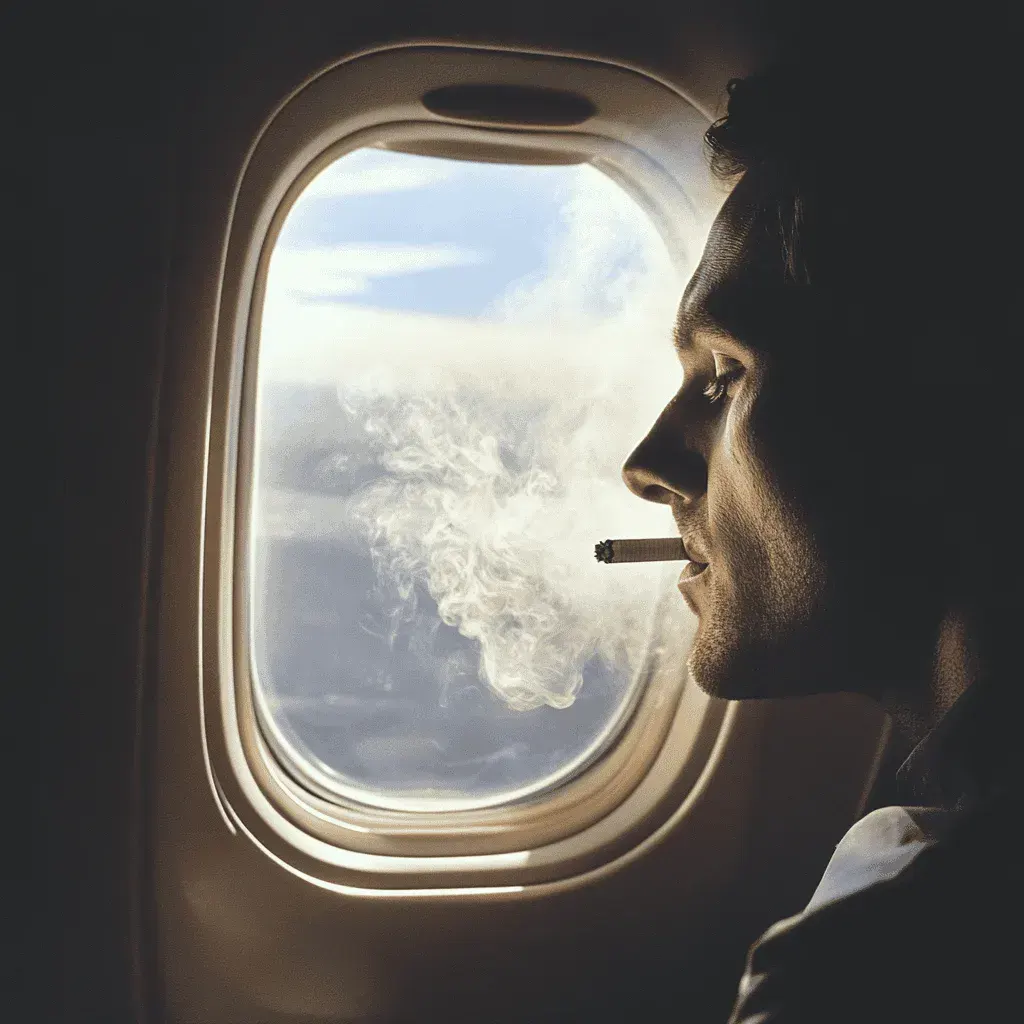
Any traveler who relies on a vaporizer to manage nicotine intake knows the anxiety of a long-haul flight. The central question—“Can I vape on a plane?”—is met with an unambiguous “no” worldwide. Federal law in the United States, enforced by the Federal Aviation Administration (FAA) and the Department of Transportation, expressly bans the use of electronic smoking devices on all domestic and foreign air carriers operating to or from the country. The statutory basis is 49 U.S.C. § 41706, which mandates a smoke- and vape-free cabin. The International Civil Aviation Organization (ICAO) echoes this standard, meaning the prohibition is effectively universal across scheduled passenger flights, regardless of the airline’s country of origin or the flight’s route.
Even so, tens of thousands of passengers travel with vapes daily without incident because they scrupulously observe the carry-on storage rules and never, ever attempt a mid-air puff.
Stealth vaping—exhaling a tiny plume into a sleeve, using a high-PG liquid that produces less visible aerosol, or vaping inside a lavatory—is still illegal and will trigger trouble. Modern aircraft are equipped with particle-sensitive detectors in lavatories and occasionally in cargo-hold-adjacent compartments. These sensors do not differentiate between cigarette smoke, e-cigarette vapor, or even a dense burst of deodorant spray. When a detector activates, the flight deck is alerted immediately, and crew will locate the source. The consequences range from an on-the-spot report to a police reception at the gate, and in the most severe cases, an unscheduled diversion that could cost the offending passenger tens of thousands of dollars in restitution.
Thus, vaping onboard is a gamble no sensible traveler should take.
TSA Rules: Carry On Only, Never Check a Vape
The Transportation Security Administration (TSA) allows electronic cigarettes and vaping devices exclusively in carry-on luggage. The entire family of electronic nicotine delivery systems (ENDS)—box mods, pod kits, disposable vapes, and even heat-not-burn devices—must never be placed in checked baggage. The reasoning is straightforward: lithium-ion batteries pose a fire hazard inside the unpressurized, unsupervised cargo hold. Loose lithium cells from removable-battery mods are especially risky if they short-circuit against metal objects; a fire in the hold is catastrophic because it is difficult to access and extinguish mid-flight.
When packing for security screening, all e-liquid containers fall under the 3-1-1 liquids rule. Each bottle must be 3.4 ounces (100 milliliters) or smaller, and all bottles must fit comfortably inside a single quart-sized clear resealable bag. This applies to nicotine e-liquid, zero-nicotine flavorings, and CBD vape juice—any liquid intended for vaporization. Larger quantities of juice can go in checked luggage, as there is no battery restriction on liquid alone, but international travelers should verify import limits at their destination. Spare batteries, including popular 18650 and 21700 cells, must travel in the cabin encased in individual plastic bags or dedicated silicone protective sleeves.
Loose batteries rattling around a pocket or bag with coins, keys, or other conductive items are a recipe for thermal runaway. The TSA strongly recommends battery cases.
You cannot vape inside any U.S. airport except inside a designated smoking lounge, and many major airports have gone entirely smoke- and vape-free indoors. Using a device at the gate or inside a lavatory can earn a warning from airport security, airport police, or a TSA officer. Charging a vape from an aircraft seat power outlet is explicitly prohibited by most airlines; the combination of enclosed space and a charging lithium cell is considered too risky.
How Airlines Enforce the Ban and the Penalties They Impose
Every major commercial airline, irrespective of its home country, categorically forbids the use of e-cigarettes onboard. While all major carriers align on the carry-on-only rule for devices, the severity of enforcement varies, and the financial and legal penalties can be staggering. The table below summarizes policies from several of the world’s busiest airlines, including the fines and sanctions they may impose.
| Airline | Carry Vape? | Vape Onboard? | Potential Consequences |
|---|---|---|---|
| American Airlines | Yes, carry-on only | No | Fine up to $2,000; possible lifetime flight ban |
| Delta Air Lines | Yes, carry-on only | No | Federal fines plus permanent revocation of flying privileges |
| United Airlines | Yes, carry-on only | No | Civil penalty exceeding $3,000; law enforcement may be notified |
| Southwest Airlines | Yes, carry-on only | No | Minimum $500 fine; passenger may be denied future boarding |
| JetBlue Airways | Yes, carry-on only | No | Flight ban; possible arrest and referral to FBI |
| Spirit Airlines | Yes, carry-on only | No | Immediate flight ban; fines starting at $2,600 |
| British Airways | Yes, carry-on only | No | Fine up to £5,000; police may meet the aircraft |
| Emirates | Yes, carry-on only | No | Confiscation; lifetime ban; reported to local authorities |
| Ryanair | Yes, carry-on only | No | Refused carriage and possible criminal prosecution |
| Qantas | Yes, carry-on only | No | AUD 10,000+ fine; up to 2 years in prison under Australian law |
| Lufthansa | Yes, carry-on only | No | Immediate report to the captain; fine under German aviation law; entry on no-fly list |
| Air Canada | Yes, carry-on only | No | Fine up to CAD $5,000; possible criminal charges under Canadian Aviation Regulations |
| Singapore Airlines | Yes, carry-on only | No | Police reception on arrival; fine up to S$2,000; possible imprisonment |
Beyond the airline’s own sanctions, the FAA can independently fine a passenger up to $37,000 per egregious violation, though typical first-time civil penalties range from $2,000 to $4,000. In 2023, a traveler on a transcontinental U.S. flight was fined $3,000 and banned for life after vaping in a lavatory; on a transatlantic route, a passenger’s actions forced an emergency diversion, resulting in a restitution bill exceeding $15,000. Under federal criminal law, charges such as interference with a flight crew or tampering with a smoke detector can lead to imprisonment. The airline will permanently revoke your boarding privileges, and your identity may be circulated among other carriers. The long-term consequences—including a criminal record that hinders international travel—far outweigh any momentary relief a vape might provide.
What Actually Happens When the Detector Sounds
When a lavatory aerosol detector alarms, a flight attendant immediately follows a rigid protocol: the cockpit is notified, the passenger who last occupied the lavatory is identified, and a report is drafted while the aircraft is still in the air. Law enforcement officers, often from the airport police, customs, or federal agencies, will be waiting at the arrival gate. Even if the incident does not lead to handcuffs, the airline will open an internal investigation, and a permanent internal record will prevent you from flying with that airline ever again.
In the United Kingdom, the Aviation Act empowers police to arrest passengers who smoke or vape aboard an aircraft. Convictions can carry up to two years in prison. Nations like Singapore treat vaping itself as a criminal offense; doing so on an inbound flight compounds the violation. Thai authorities have arrested tourists for vaping at the airport upon disembarkation. It is not an exaggeration: a single stealth puff can evolve into an international legal morass with crippling financial and personal costs.
Vaping at Airports: A Patchwork of Restrictions
The era of sprawling indoor smoking lounges is largely over. Most major U.S. and European hubs now ban smoking and vaping entirely inside the terminal. Once you step through the security checkpoint, there is often no legal place to use a vaporizer. However, a few airports retain ventilated rooms that explicitly permit vaping, and travelers should check ahead to avoid an accidental fine or a stressful encounter with airport police.
Airports with confirmed post-security vaping or smoking lounges include Hartsfield-Jackson Atlanta International (ATL), Las Vegas McCarran International (LAS), Frankfurt Airport (FRA), and Tokyo Narita (NRT). Denver International (DEN) offers only outdoor pre-security designated areas, and Los Angeles LAX, New York JFK, Chicago O’Hare ORD, London Heathrow LHR, Dubai DXB, and Singapore Changi SIN are completely smoke- and vape-free inside. Airport operators can impose their own fines, and TSA or CBP officers may remind passengers that vaping near gate areas is a violation. Before you fly, visit the airport’s official website; policies shift, and some lounges close without notice.
Safe Travel with a Vape: A Step-by-Step Guide
Arriving at your destination with your gear intact and without legal trouble is simple if you follow a disciplined routine. First, empty your tank before you leave for the airport. Changes in cabin pressure will force e-liquid out of airflow channels and into your bag or pocket. Rinse the tank if possible, seal it in a plastic bag with a paper towel, and refill only after you have landed. Disposable vapes should be placed in a protective pouch in your carry-on; they also contain a lithium battery, so the checked-luggage ban applies.
Power down the device completely. If your mod uses removable batteries, extract them and place each cell in an individual silicone sleeve or a dedicated battery case. Any spare 18650, 21700, or pod-system battery must be carried in the cabin inside a protective container, never loose. Keep batteries separated from metal objects like keys, coins, or USB cables. Devices with internal batteries should be locked or switched off; some have a physical off switch that is ideal for travel.
Liquid management: decant your e-liquid into 30ml or smaller bottles that fit easily in the quart-sized liquids bag. Larger volumes can travel in checked suitcases, but confirm the destination country’s customs rules—some nations restrict nicotine concentration or total volume. When connecting through airports in countries with vape bans, even a transit without clearing immigration can be risky if you must re-clear security with your carry-on. Research your entire itinerary. The FAA’s smoke-free flights resource and foreign embassy websites are reliable starting points.
Countries Where Vaping Itself Is Illegal: Do Not Bring a Device
A surprising number of destinations impose an outright ban on the import, sale, or possession of vaping products. Carrying even an unused, sealed disposable vape into these jurisdictions can result in on-the-spot confiscation, heavy fines, detention, or imprisonment. Several of the strictest examples demand that travelers leave all vaping hardware at home:
- Thailand – Possession of an e-cigarette is illegal; tourists have faced fines of up to 30,000 THB and, in some cases, jail time.
- Singapore – A total ban on vaping products; penalties include fines up to S$2,000 and caning for repeat offenders.
- India – Nationwide prohibition on manufacture, import, and sale; foreign travelers have had devices confiscated at airports.
- Australia (for nicotine) – Nicotine vaping is prescription-only; possessing nicotine e-liquid without a valid script is an offense, and devices may be seized.
- Brazil, Argentina, Mexico – Commercial sale bans and increasingly restrictive public-use prohibitions; customs often confiscate devices.
- Qatar, Brunei, Cambodia – Strict regulations with border enforcement; Qatar, for example, frequently seizes vapes at Hamad International Airport.
Authorities in these locations rarely accept “I didn’t know” as a defense. A quick visit to the destination’s embassy website or the U.S. Department of State travel advisory page can prevent a holiday from becoming a legal crisis. If there is any ambiguity, leave your device behind and make alternative nicotine arrangements at your final stop.
Long-Haul Nicotine Management: Legal Alternatives
Twelve hours in a metal tube without a puff is tough, but completely doable with the right substitutes. Nicotine replacement therapy (NRT) products—gum, lozenges, and transdermal patches—are explicitly allowed on aircraft and can be used at any time during the flight. They provide a steady, controlled dose that eliminates the most disruptive withdrawal symptoms without triggering detectors or violating any regulation. Tobacco-free nicotine pouches (such as ZYN, On!, and Velo) are also legal on planes, though a few airlines ask that they be kept in the original manufacturer’s packaging. These pouches are discreet and do not produce aerosol, so they sidestep the ban entirely.
For passengers who vape for relaxation or flavor rather than nicotine, herbal toothpicks, sugar-free gum, and deep-breathing exercises offer a sensory distraction. CBD edibles might be an option, but the international carriage of CBD remains a legal minefield; check every country on your itinerary. Remember that flight crews are trained observers, and even the most careful “exhale-into-the-blanket” technique is likely to be noticed. A single incident can brand you as a security risk, so the only intelligent choice is to leave the vapor for solid ground.
Frequently Asked Questions About Vaping and Air Travel
Are disposable vapes handled differently from refillable kits?
No. Disposables contain a lithium battery and a reservoir of e-liquid, so they must be in your carry-on bag and cannot be activated onboard. Their small size does not exempt them from the federal ban, and they will trigger lavatory smoke detectors just as readily as a larger device.
Can I recharge my vape using the seatback USB port?
No. U.S. airlines and most international carriers explicitly forbid charging e-cigarettes from the aircraft’s electrical system. The risk of a battery thermal event in an enclosed cabin is the stated justification. Instead, carry a fully charged device or a USB power bank (also in your carry-on) for use after landing.
What if TSA discovers a vape in my checked baggage?
TSA officers will pull the bag for inspection, remove the prohibited device, and leave a notice of inspection. The item will not be permitted to travel in the cargo hold. You may be contacted to retrieve it and place it in your carry-on. Repeated violations could attract civil penalties, and the airline may delay your luggage.
Are there any airlines anywhere that allow vaping?
No scheduled commercial airline permits vaping. Even private charter operators typically enforce a strict no-smoking/no-vaping rule because of insurance requirements and the universal international safety regulations that ICAO member states adopt.
Can I keep my vape in my pocket when traveling to a country where it’s illegal, as long as I don’t use it?
No. In jurisdictions with a total ban, possession alone is a crime. Customs officers can inspect your belongings on arrival, and if they find a device, you risk confiscation, a fine, detention, or deportation. The safest course is to leave everything at home.
What if a lavatory smoke detector alarms but I am innocent?
Stay calm, exit the lavatory, and cooperate with the crew. Volatile aerosol products like hairspray or deodorant can trigger the sensor, and false alarms are recognised. The crew will investigate; if no evidence of vaping is found—no odor, no device, no visible vapor—there are ordinarily no consequences, though the event will be noted in the flight report.
Key Takeaways for Flying with a Vape in 2025
- Vaping is illegal on every domestic and international commercial flight; highly sensitive detectors leave almost no room for undetected use.
- Devices and spare batteries must be packed in carry-on luggage only because of lithium fire hazards; checked bags are forbidden.
- E-liquids follow the 3-1-1 liquids rule: containers no larger than 100ml, all in a quart-sized clear bag for screening.
- Airlines and the FAA impose fines from $500 to over $4,000, plus permanent flight bans, criminal charges, and liability for any diversion costs.
- Countries such as Thailand, Singapore, India, and Australia (without prescription) ban or heavily restrict vaping; do not travel to these places with any vaping equipment.
- For long flights, rely on nicotine gum, patches, or pouches—legal, discreet methods that won’t jeopardize your journey.
Understanding and respecting the global patchwork of rules ensures your device arrives safely and your travel record stays clean. A well-planned trip leaves the vapor behind in the security line where it belongs, ready for you to enjoy once you are back on the ground.
