Table of Contents
Introduction
Flying with a dog in 2025 is far more complex than simply buying a ticket and showing up at the gate. Whether you’re relocating across the country, taking a long-awaited vacation, or responding to a family emergency, understanding current airline pet policies will spare you expense, confusion, and heartbreak. The rules pivot sharply on your dog’s size, breed, destination, and even the forecast. Small dogs under the seat ride in the cabin for a fee; large dogs usually travel as cargo, subject to mechanical, seasonal, and breed-based restrictions. Service dogs enjoy federally protected access, but emotional support animals no longer do.
This comprehensive guide walks you through every layer: airline fees, paperwork, health certificates, international quarantine protocols, behavioral preparation, and emergency alternatives when flying simply isn’t safe.
Can I Take My Dog on a Plane? The Three Travel Categories
Airlines classify pet travel into three distinct streams: in-cabin, checked baggage, and cargo. The category your dog falls into is first determined by weight, then by carrier dimensions, and finally by the airline’s operational model.
In-Cabin Travel
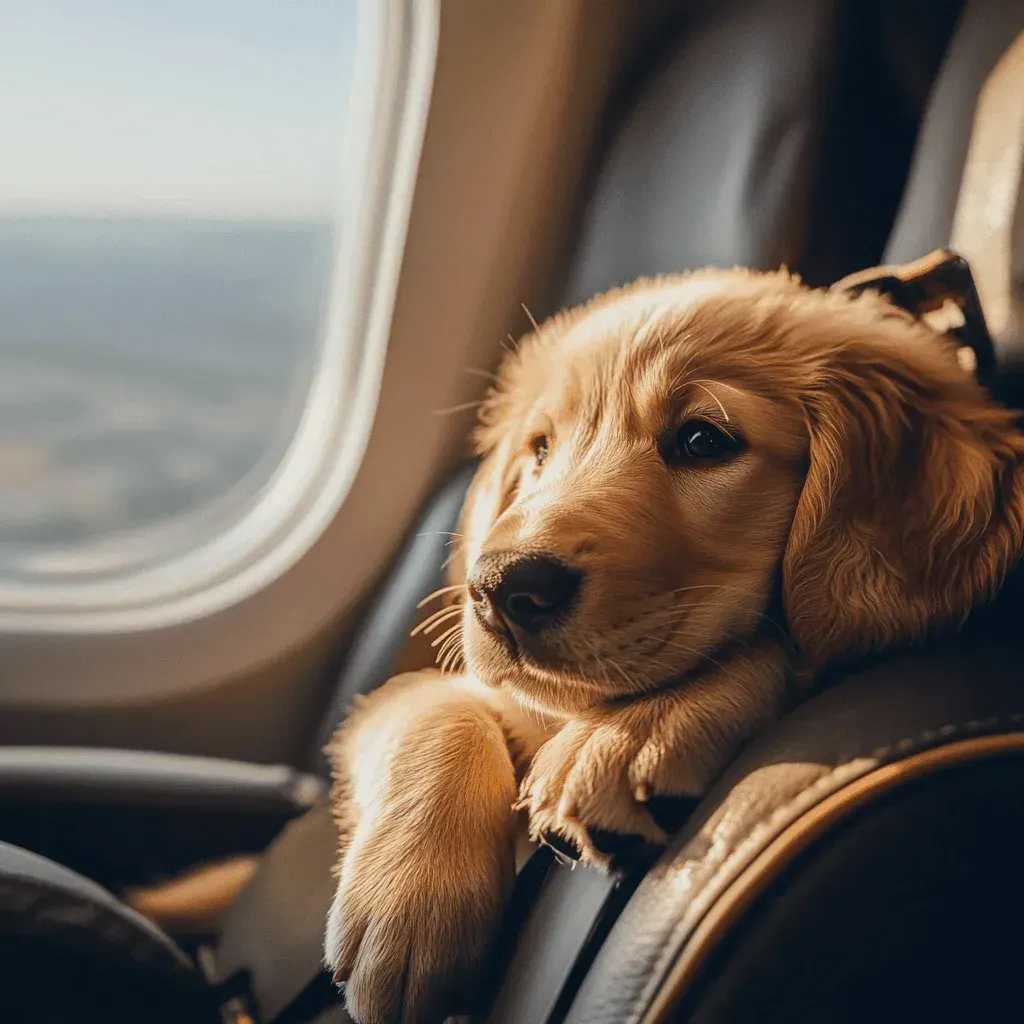
In-cabin transport is reserved for small dogs that fit inside a soft-sided, leak-proof carrier stowed under the seat in front of you. Most U.S. carriers set a combined weight limit of 20 pounds for the pet and carrier, and maximum carrier dimensions hover around 18.5 inches long by 8.5 to 11 inches wide by 13.5 inches high. Only a handful of pets are allowed on each flight — typically four to six — so you must book your dog’s spot at the same time you purchase your own ticket, and usually by phone rather than online. Fees range from $95 to $125 each way.
Checked Baggage
Historically, dogs that exceeded cabin limits could be checked as baggage, meaning they traveled in the pressurized, climate-controlled cargo hold on your same itinerary. Since 2018, however, most major U.S. airlines have eliminated this option for pets, shifting entirely to cargo-only transport. Alaska Airlines remains a notable exception, accepting pets up to 150 pounds (with kennel) as checked baggage on domestic flights. Other airlines may allow checked pets on certain regional or international routes, but the default for large dogs is now cargo.
Cargo Transport
When your dog travels as cargo, you purchase a separate ticket through the airline’s freight division — such as Delta Cargo or United PetSafe — and drop off and collect your pet at a cargo facility, which is often in a different terminal or even a different airport. Your dog does not need to be on your specific flight, and unaccompanied shipping is common. Cargo pricing varies widely by weight and destination, ranging from about $200 to over $1,000 one way. While cargo holds are pressurized and temperature-controlled, the handling process, longer wait times, and faster temperature fluctuations mandate extra preparation.
In-Cabin Dog Travel Rules in 2025
If your dog fits the in-cabin profile, you’ll find a fairly consistent rulebook across U.S. airlines. Most charge $125 each way (United, American, Southwest), though Delta charges $95 and Alaska $100. Frontier has no weight limit but enforces strict carrier dimensions that effectively cap size at roughly 18″ x 14″ x 8″. Here are the critical components:
- Carrier specifications: Soft-sided carriers are strongly recommended because they offer more flexibility when sliding under the seat. The carrier must be leak-proof, well-ventilated, and entirely stowable. Roughly 18.5″ x 8.5″ x 13.5″ is the maximum size on most carriers; confirm the exact limits on your airline’s travel-with-pets page before buying.
- Weight ceiling: The combined weight of the dog and carrier cannot exceed 20 pounds on nearly every airline. Some carriers, like JetBlue, enforce a 20‑pound limit with no exceptions. Weigh your dog and carrier together on a reliable scale before booking.
- Age thresholds: Puppies must be at least 8 weeks old and fully weaned for domestic flights. International routes often raise the minimum to 16 weeks, a requirement driven by the destination country’s rabies vaccination rules.
- Pet count per flight: Most cabins allow four to six pets total, and reservations are first-come, first-served. Online booking isn’t always available — you may need to call reservations immediately after purchasing your own ticket to secure a pet spot.
- Seat restrictions: You cannot sit in a bulkhead row, an emergency exit row, or any seat lacking underseat storage. This often rules out certain first-class and premium-economy configurations. Gate agents will reassign your seat if needed.
Always read the airline’s current policy before you pay. A good aggregator, such as PetTravel.com’s airline pet policy page, lets you compare rules side by side.
Checked Baggage and Cargo: When Your Dog Flies Below
Dogs too large for the cabin, or those traveling on carriers that no longer offer checked pet service, must go in the cargo hold. This process requires more detailed planning, a hard-sided kennel, and a keen awareness of weather and breed constraints.
Kennel Requirements
Your dog must be in a rigid, IATA-compliant kennel large enough for them to stand, turn around, and lie down in a natural position. The door must have a secure central locking mechanism — not just spring clips. Inside, attach a spill‑proof water dish and place absorbent bedding (no loose straw). On the outside, affix “Live Animal” stickers, upright arrows, and a contact card with your name, phone number, and destination address. Many cargo facilities will inspect the kennel and may reject it if airflow is restricted or if zip ties are missing from the door corners.
Temperature Embargoes
Airlines will not knowingly accept a dog when ground temperatures at any point in the journey exceed 85°F or fall below 20°F. Some carriers impose tighter limits — United’s PetSafe program, for example, suspends pet acceptance when temperatures drop below 45°F for snub-nosed breeds. During summer and winter, these embargoes can ground animals for days or weeks. You can sometimes override restrictions with a vet letter confirming your dog is acclimated, but many airlines simply refuse to negotiate. Always book early-morning or late-evening flights in hot months and avoid cargo travel entirely during heat waves or extreme cold snaps.
Breed Restrictions in Cargo
Brachycephalic (snub-nosed) breeds — French Bulldogs, English Bulldogs, Pugs, Boston Terriers, Boxers, Shih Tzus, and others — face a dramatically higher risk of respiratory failure at altitude. Almost every major U.S. airline has permanently banned these breeds from cargo compartments, even when the dog is within the weight limit. If your dog is snub-nosed and too large for the cabin, flying commercially is not an option. Some airlines further restrict muscular or “aggressive” breeds such as American Pit Bull Terriers and Dogo Argentinos in cargo. Check your airline’s restricted breed list early, because it overrides everything else.
Cargo Drop-off and Pick-up
Unlike checking a suitcase, pet cargo requires a separate visit to the airline’s freight facility, which may be miles from the passenger terminal. Drop-off deadlines are often two to four hours before departure. After landing, it can take one to two hours for your dog to become available. Factor in these logistics when planning connections or arranging ground transportation. Fees for a 50‑pound dog typically fall between $400 and $700 one way.
The USDA APHIS pet travel website details federal requirements that cargo shippers must follow.
Service Animals and Emotional Support Animals: The 2025 Landscape
The Air Carrier Access Act (ACAA) protects the rights of passengers with disabilities to fly with trained service dogs. In 2021, the Department of Transportation (DOT) redefined “service animal” exclusively as a dog individually trained to perform work or tasks for a person with a disability. Psychiatric service dogs are included if they perform a specific action — such as interrupting a panic attack or retrieving medication — but an emotional support animal (ESA) that merely offers comfort by its presence is no longer classified as a service animal.
Service dogs fly in the cabin free of charge, regardless of size or breed. You must submit a completed DOT Service Animal Air Transportation Form to the airline at least 48 hours before departure (or at the gate if travel is arranged last‑minute). Some airlines also require a veterinary health form. Fraudulent claims are treated seriously and can lead to denied boarding or federal penalties. For the most current forms, visit the DOT’s air consumer protection page.
Emotional support animals are now treated identically to pets on U.S. airlines. ESAs must fit in the carrier under the seat and pay the standard pet fee; if they exceed the cabin size limit, they must travel as cargo and face the same breed and temperature restrictions. A handful of international airlines may still honor ESA status under local law, but the global trend is toward uniformity. Always check the specific carrier’s policy before buying a ticket relying on ESA assumptions.
Health Documents and International Travel Requirements
A domestic flight typically requires a veterinary health certificate issued within 10 days of travel, confirming your dog is free of infectious disease and fit to fly. While some airlines don’t strictly ask for it, carrying a current rabies vaccination certificate and health form removes any chance of a last‑minute refusal at the counter.
International pet travel is a multi‑month process. Each destination country writes its own import protocol, and failing to meet even one detail can result in a lengthy quarantine or denial of entry. Standard requirements include:
- ISO 15‑digit microchip: The microchip must be implanted before or on the same date as the rabies vaccination. If your dog already has a different chip, get the ISO standard chip inserted and ensure all records reference it.
- Rabies vaccination and titer test: After the vaccine, wait at least 30 days, then have your veterinarian draw blood for a rabies antibody titer test sent to an approved laboratory. Results are typically required to show a level of at least 0.5 IU/mL. The test is valid for the life of the pet provided boosters remain current.
- Official veterinary certificate: This must be completed by a USDA‑accredited vet and then endorsed by the USDA or the appropriate government office. Many countries require the certificate to be issued within a narrow window before departure.
- Import permit: Countries such as Australia, New Zealand, and the United Arab Emirates require a permit that you apply for months ahead.
- Quarantine: Hawaii’s 5‑Day‑or‑Less quarantine program is achievable only if every pre‑arrival requirement is met perfectly; otherwise, animals are confined for up to 120 days. Australia mandates a minimum 10‑day quarantine at the Mickleham post‑entry facility. The UK, EU member states, and Japan each have distinctive timelines.
Start preparing at least four to six months before your intended travel date. Engaging a professional pet shipper accredited by the International Pet and Animal Transportation Association (IPATA) is the single most effective way to navigate these complexities and avoid costly missteps.
Breed-Specific Restrictions and Airline Bans
Beyond the universal cargo ban for brachycephalic dogs, several airlines maintain additional restricted‑breed lists for cargo travel. These are not always obvious at first glance. For example, United’s PetSafe program prohibits a long list that includes American Pit Bull Terrier, American Staffordshire Terrier, Bull Terrier, Dogo Argentino, Fila Brasileiro, and Wolf hybrids, among others. Delta Cargo and Alaska Airlines do not currently enforce aggressive‑breed bans, but every airline restricts snub‑nosed dogs. Always verify the most current list on the airline’s own web page — third‑party summaries can be outdated.
If your dog appears on a ban list and cannot fly in‑cabin, your only commercial option is ground transport or a specialized charter.
Common snub‑nosed breeds universally barred from cargo: French Bulldog, English Bulldog, Pug, Boston Terrier, Boxer, Shih Tzu, Lhasa Apso, Pekingese, Brussels Griffon, Dutch Pug, and Japanese Chin. Mixed breeds with any snub‑nosed ancestry are often judged by appearance, so if your dog has a noticeably short muzzle, assume cargo is off the table.
Preparing Your Dog for a Smooth Flight
Behavioral and physical preparation make the difference between a calm, invisible dog and a stressed, vocal one that draws unwanted attention from crew and fellow passengers.
Carrier Training
Weeks before the flight, turn the carrier into a safe den. Leave it open in your living room with a comfortable mat, treats, and meals inside. Praise your dog for voluntarily entering. Gradually close the door for a few seconds, then minutes, building duration until your dog can rest quietly for an hour. This desensitization reduces panic at the airport.
Exercise and Bathroom Breaks
On travel day, give your dog a long walk and ample potty time before arriving at the terminal. Most major airports now have post‑security pet relief areas — locate them in advance using the airport map. For cargo dogs, exercise them thoroughly and limit water about two hours before drop‑off to minimize accidents while still keeping them hydrated. Don’t withhold water entirely; a dog can overheat without fluids.
Feeding Strategy
For cabin flights under six hours, offer a light meal at least four hours before departure to reduce motion sickness and the need to eliminate. For longer or cargo trips, follow your vet’s guidance; many recommend fasting the dog for six to eight hours before travel to prevent vomiting during turbulence or altitude changes.
Calming Aids
Products like Adaptil pheromone collars, Thundershirts, or veterinarian‑approved supplements (such as Zylkene or Solliquin) can take the edge off without sedation. Never administer prescription sedatives without a vet’s explicit directive, because altitude can magnify the respiratory‑depressant effects. A trial dose a week before the trip reveals whether your dog becomes agitated or lethargic.
Packing the Carrier
For in‑cabin travel, line the carrier with an absorbent pad, include a familiar‑smelling shirt, and attach a small bag to the outside with a leash, collapsible bowl, waste bags, and a copy of health documents. For cargo, freeze the water dish so it melts gradually during the hold time, use an absorbent mat secured to the kennel floor, and never put loose toys or blankets that could shift and obstruct the door.
At the Airport: Check‑In, Security, and Boarding
When flying with an in‑cabin dog, online check‑in is not available. Arrive at least 30 minutes earlier than the airline’s standard recommendation. The check‑in agent will inspect the pet, carrier, and paperwork, and you’ll pay the pet fee (often at the counter, or as directed). Keep a copy of the airline’s pet policy on your phone — it can resolve disputes quickly.
At TSA screening, remove your dog from the carrier and send the empty carrier through the X‑ray. Walk your dog through the metal detector on a leash, without the carrier. If your dog is anxious or likely to bolt, request a private screening room. Once through, reassemble everything swiftly and head to the gate. Choose a quiet waiting spot, board with your assigned group, and position the carrier completely upright under the seat with the mesh window unblocked.
For cargo dogs, report to the cargo facility well ahead of the airline’s deadline. You’ll complete a live‑animal checklist and verify the flight routing. After landing, cargo pets are usually available within one to two hours at the receiving cargo terminal, not at the passenger baggage claim.
What If My Dog Can’t Fly? Alternatives to Commercial Air Travel
When breed bans, temperature embargoes, or anxiety make commercial flying impossible or irresponsible, several alternatives keep your pet moving.
Professional ground transport: Licensed pet‑transport companies operate climate‑controlled vans with frequent stops. A coast‑to‑coast trip typically costs $1,500 to $3,000 and avoids altitude, pressurization, and cargo‑hold risks entirely. Look for companies registered with the Department of Agriculture and carrying insurance.
IPATA‑registered pet relocation specialists: These experts handle international and domestic moves door‑to‑door, selecting pet‑friendly airline cargo programs, booking direct flights, and managing all paperwork. Their fees are significant but often save more in avoided quarantine or rebooking costs.
Pet‑friendly private charters: Shared private jet services like Pet Jets allow multiple pet owners to split the cost of a flight where dogs travel in the cabin, regardless of size. Seats can start around $2,000, making it a realistic option for large breeds, snub‑nosed dogs, or families with several pets. Private terminals further reduce stress.
Road trip: For destinations within a day’s driving range, a car ride with frequent breaks at pet‑friendly hotels may be the simplest, safest route. Prepare a dog‑focused travel kit and pre‑identify emergency vets along the route.
If the journey simply isn’t safe, leaving your dog with a trusted sitter is a responsible choice. Schedule a trial overnight well before departure and use a platform that provides sitter reviews and insurance.
Common Questions and Practical Advice
Can I buy a seat for my dog? No U.S. airline allows you to purchase an extra seat for a pet carrier. Your dog must remain inside the carrier, under the seat in front of you, for the entire flight. On a small number of international carriers, you can purchase an additional seat only if the carrier fits within the seat‑back footprint, but you must still keep the dog inside.
Can two dogs share one carrier? Most airlines permit only one pet per carrier per passenger. A few will allow two small animals of the same species in one carrier if the combined weight still falls under the 20‑pound limit and the carrier size allows both to move naturally — but the fee is often charged per pet, and the space is counted as two pets toward the flight limit. Assume you’ll need separate carriers unless you’ve confirmed otherwise in writing.
What if my dog barks or whines in‑flight? A disruptive pet may result in you being relocated to the back of the plane or, in extreme cases, asked to deplane. The crew cannot intervene beyond what you allow. Train your dog to settle in the carrier using gradual exposure. A calm, quiet voice and occasional treat slipped through the mesh can help, but never unzip the carrier door in‑flight.
Are there limits on where I can sit? Beyond the bulkhead and exit‑row restrictions, some premium cabins have seat designs that lack underseat storage entirely. Even if your ticket books into first class, you may be moved to coach. Always call the airline to confirm that your assigned seat accommodates the carrier.
Can my dog travel unaccompanied? Yes, through airline cargo. You don’t need to be on the same flight, but you must handle drop‑off and pick‑up at the cargo terminals. This is common for breeders shipping puppies to new owners.
Final Recommendations
Flying with a dog in 2025 requires you to master a matrix of airline policies, breed exceptions, seasonal embargoes, and international paperwork. The single most important step is to begin planning the moment your trip is confirmed: secure the in‑cabin spot or cargo booking simultaneously with your ticket, gather health documents, acclimate your dog to the carrier, and know the precise fee and terminal logistics.
For international moves, engage a professional pet shipper months in advance and build a paper trail that leaves nothing to chance. If your dog cannot fly in the cabin and cargo risks are too high — due to breed, temperature, or anxiety — road transport or shared private charters are not luxuries; they are the only safe path. The goal is never to force the flight; it is to land with a healthy, calm dog. Sometimes the best journey is the one kept on the ground.
Key takeaways:
- Small dogs under 20 pounds can fly in‑cabin for $95–$125 each way, but space is limited and booking is first‑come, first‑served.
- Large dogs must travel as cargo; breed‑specific bans and temperature embargoes strictly control when and if they can fly.
- Service dogs fly free in the cabin with proper DOT documentation; ESAs are treated as regular pets.
- International travel demands an ISO microchip, rabies titer test, health certificate, and potentially a quarantine period — start at least 4–6 months ahead.
- Carrier training, strategic feeding, and exercise are the cornerstones of a low‑stress flight.
- When commercial flight isn’t safe, IPATA‑registered shippers, ground transport, or private charters become the necessary alternatives.